Reversed Sensors: Warning Signs
How to tell whether garage door safety sensors are reversed, misaligned, or miswired, using the wall button test, indicator lights, and blinking codes.
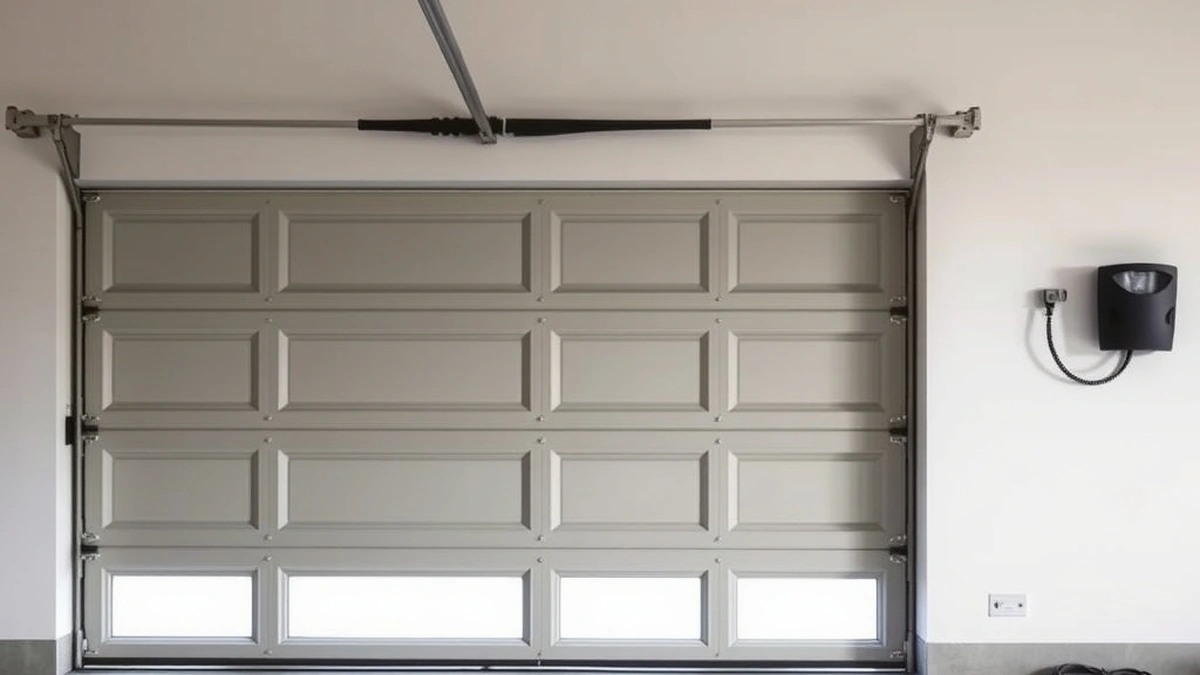
The clearest sign of reversed sensors is a door that closes a few inches and returns, yet closes normally while you hold the wall button.
- Most common sign
- Reverses after a few inches
- Confirming test
- Hold the wall button
- Typical fix
- $75–$250
- Emergency premium
- $250–$500
Some links on this page are affiliate links.If you buy through them we may earn a commission at no extra cost to you. We do not accept payment for rankings. Read the full disclosure.
Reversed garage door sensors announce themselves with a very specific pattern: the door starts down, stops after a few inches, and goes back up. Press and hold the wall button and it closes normally. That single behavior tells you the motor, springs, and cables are healthy and the opener is reading a beam that is not there.
What It Looks Like From the Driver’s Seat
Reversed sensors are a photo-eye pair that has been installed with the units on the wrong sides, aimed away from each other, or wired to the wrong terminals. The result is a safety circuit the opener interprets as permanently blocked, so it refuses to close the door under normal power.
The safety reverse exists for a reason: a closing door can crush a child, a pet, or a bicycle. When the beam cannot be confirmed, the opener defaults to open — correct for a broken beam, infuriating when the doorway is empty.
Because opening is unaffected, many homeowners notice nothing until they try to leave, which is why the fault gets reported as “the opener stopped working” rather than “the sensors are wrong.”
Sign 1: The Wall Button Test
This is the fastest confirmation available without tools.
Press the wall control once and watch. The door moves a few inches, stops, and returns. Now press and hold the wall control. The door travels all the way down and stays down for as long as you keep holding.
That difference is the whole diagnosis. Holding the button bypasses the photo-eye circuit and lets the motor run without a beam confirmation. If the door closes under hold and reverses under a single press, the opener is fine and the sensor circuit is not.
Stop there and treat it as a sensor fault. Do not tape the button down or wedge something against it. A door that closes without a working safety reverse is a hazard to anyone who walks through the opening.
Sign 2: Read the Indicator Lights
Each sensor has an indicator light on its face. Learn the normal pattern first: typically one unit shows a steady light, and the other changes when you pass your hand through the beam.
| Light pattern | What it usually means |
|---|---|
| One steady, one blinking | Beam not reaching the receiver; aim, obstruction, or reversed units |
| Both dark | Power not reaching the pair; wiring, transformer, or open circuit |
| Both steady, door still reverses | Beam confirmed but opener force or travel limit is set wrong |
| One steady, other flickers with your hand | Normal operation |
A pair that shows both dark is the strongest hint of reversed or miswired units, because each unit is individually fine but the circuit through them is broken. A pair with one steady and one blinking is more often alignment, but a reversed pair produces it too when the sending unit ends up where the receiving unit’s wire expects.
Before concluding anything, wipe both lenses with a dry cloth and check that nothing — a trash can, a snow shovel, a bicycle — is standing in the beam.
Sign 3: Flash Codes and Time-of-Day Patterns
Most openers report faults by flashing the ceiling light a set number of times after a failed cycle. Count the flashes and look the number up for your model; the count usually distinguishes a wiring fault from an obstruction.
A second pattern is worth noting: failures that happen only in late afternoon. Low sun aimed into a receiver can saturate it and produce the same reverse-on-close behavior as a reversed pair. If the door works all morning and fails from 4 to 6 p.m., suspect sun before wiring.
The third pattern is weather. A pair that fails on humid mornings and works by noon is usually suffering from condensation or a corroded splice, not from being reversed. Look at the wire run before replacing parts.
Sign 4: Visible Clues at the Bracket
Get down at floor level with a flashlight and look at how the units are mounted.
Both lenses should face across the opening at each other. A lens pointed at the wall, the floor, or the door track is a reversed or spun bracket. Both units should sit at roughly the same height, commonly 6 inches above the floor, and both should be inside the door’s path so the panel breaks the beam as it descends.
Then look at the wire. A pair that was reinstalled after track work often shows fresh tape, a new splice, or a wire pulled tight enough to lift the unit off square. Any of those is a reason to check the terminals before buying a replacement kit.
If the door is also crooked, binding, or scraping, the sensor fault is not the only problem. Our guide to off track signs covers track damage, and broken spring signs covers the spring symptoms that can mimic a door problem.
Confirm It in Four Steps
- Unplug the opener at the ceiling outlet.
- Look at both lenses and confirm each faces the other, not the wall.
- Check that both units sit at the same height and that neither bracket is loose.
- Plug the opener back in and watch the lights while you pass a hand through the beam.
If the pattern normalizes and the door closes, you found an aim problem. If the lights stay dark, the fault is in the wiring or the units themselves. The repair sequence is in reversed sensors repair, and the cost of each path is in reversed sensors cost.
When It Is Something Else
Not every reverse-on-close is a sensor. A door that reverses at the same low point every time, with both sensor lights steady, is usually hitting a travel limit or a force setting that is too low. A door that reverses with a jerking motion is often binding on a track or a failing roller.
The awkward cases are the ones where a technician replaces the sensors and the fault persists. That is when the opener head becomes the suspect: a dead sensor terminal, a damaged logic board, or a transformer that no longer feeds the circuit. At that point the bill moves from $75 to $250 for sensors to $150 to $350 for board work, or $300 to $800 for a new opener installed. On a unit over about 12 years old, replacement is usually the better answer.
For a broader symptom list that covers the opener itself, see opener not responding warning signs.
Bottom Line
Reversed sensors show up as a door that reverses after a few inches but closes while the wall button is held, backed by one dark or blinking sensor light, a repeating flash code, or a bracket whose lens faces the wall. Confirming it takes four steps and no tools. Repairing it runs $0 for a swap, $25 to $75 in parts for a new pair, or $75 to $250 installed — and it should be done before anyone uses that door again.
Frequently asked questions
How do I know if my garage door sensors are reversed?
The door closes a few inches and reverses, but closes fully while you hold the wall button. That pattern means the opener reads a permanent beam obstruction, which reversed or misaligned units produce.
What do the sensor lights look like when sensors are reversed?
Usually one unit shows a steady light and the other stays dark or blinks. Reversed wiring can also leave both lights dark even though the units are receiving power.
Why does my door only close when I hold the button?
Holding the wall control bypasses the safety reverse circuit. If that works, the motor and door are fine and the fault is in the sensor pair or its wiring.
Can reversed sensors still open the door?
Yes. The safety circuit only blocks closing under power. Opening is unaffected, which is why many homeowners do not notice the fault until they try to leave.
What does a blinking opener light mean?
Most brands flash the opener light a set number of times to report a fault, and sensor problems are one of the common codes. Look up the count in your model's manual.
When should I stop using the door?
As soon as the safety reverse fails to stop the door on an obstruction. A door that closes without a working beam can injure a child or pet, so treat it as out of service until fixed.
Sources
Some links are affiliate links.If you buy through them we may earn a commission at no extra cost to you. We do not accept payment for rankings. Read the full disclosure.