Opener Not Responding: Warning Signs
The early symptoms of a failing garage door opener, ranked by urgency, with what each sign usually means and what the repair tends to cost.
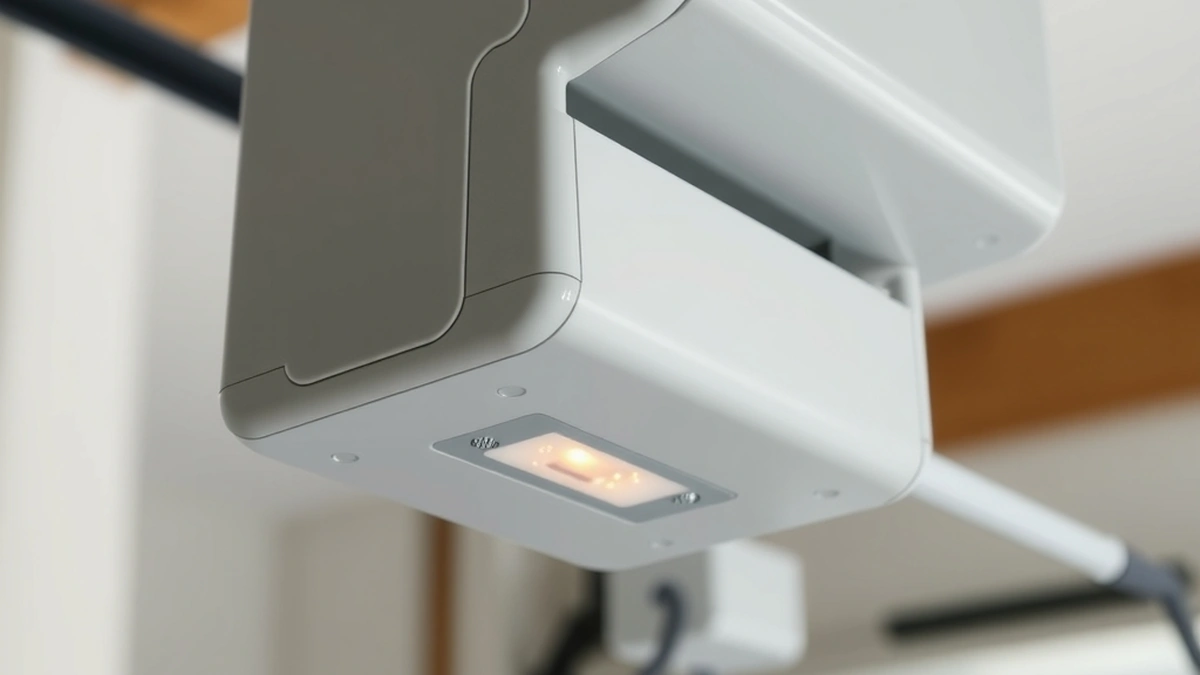
Warning signs are shrinking remote range, intermittent response, a humming opener with a still door, blinking sensor lights, grinding or burning smells, and a door that moves on its own.
- Earliest sign
- Remote range shrinking
- Most urgent sign
- Door moves on its own
- Typical sensor fix
- $75–$250
- Opener replacement
- $300–$800
Some links on this page are affiliate links.If you buy through them we may earn a commission at no extra cost to you. We do not accept payment for rankings. Read the full disclosure.
A garage door opener almost never dies without notice. It gives you weeks or months of small hints first: the remote that used to work from the street now only works from inside, the door that used to glide now pauses halfway. Those hints are the warning signs, and reading them correctly is the difference between a $75 sensor fix and an $800 replacement.
What Counts as a Warning Sign
Opener warning signs are the early, reversible symptoms of a component losing performance — reduced signal range, intermittent response, new noise, or a change in how the safety reverse behaves. They are different from a failure, which is when the opener stops responding at all.
A sign caught early usually lands in the $75 to $350 band, while a failure that strands a car often adds a $250 to $500 emergency call-out. For the full breakdown of what each outcome costs, see opener not responding cost.
Sign 1: The Remote Only Works Up Close
Remote range shrinks gradually, so homeowners adapt without noticing — parking closer, pressing twice, holding the button longer. By the time the remote “stops working,” it has been declining for months.
Three things cause it. The battery is the usual suspect and the cheapest to rule out at roughly $5 a cell. The antenna wire on the opener is the second: a thin wire hanging from the back of the unit that gets bent, tucked behind a joist, or broken. The receiver inside the opener is the third and the most expensive.
Test the difference in one step. If the wall control works and the remote fails at distance but succeeds from 10 feet away, the fault is on the signal side, not the motor side.
Sign 2: Intermittent Response and Dead Spots
An opener that works nine times in ten and then ignores you has a marginal connection: a battery on the edge, a loose wire at the wall control, a logic board with a failing relay, or interference from a newly installed LED bulb in the opener’s own light socket.
LED and compact fluorescent bulbs are a known source of radio interference at garage door frequencies. If the problem started when you changed a bulb, change it back to an incandescent or a bulb rated for openers before spending money on diagnosis.
Sign 3: The Opener Hums but the Door Stays Still
This is the most misread symptom. The motor runs, the light comes on, and the door does not move, so homeowners conclude the opener is dead. Usually the motor is fine and something between it and the door has failed.
Listen closely. A steady hum with no movement often means a stripped drive gear or a broken trolley. A hum that lasts two or three seconds and stops points to the opener’s force limit tripping because the door is binding. A single click with nothing else suggests the logic board is not sending power to the motor at all.
| What you observe | Likely cause | Typical repair cost |
|---|---|---|
| Hum, no movement, door heavy by hand | Broken spring or cable | $150–$400 |
| Hum, no movement, door light by hand | Stripped gear or trolley | $200–$500 |
| Click only, no hum | Logic board or capacitor | $150–$350 |
| Door moves a foot then reverses | Safety sensor or force setting | $75–$250 |
| Remote fails, wall switch works | Battery, antenna, or receiver | $5–$350 |
| Opener runs with no command | Board, wall control, or wiring | $150–$500 |
Before you call anyone, lift the door by hand with the opener released and the door fully closed. If it feels like 150 pounds or more, the springs are the problem. Spring work is not a homeowner job — the coil above the door holds enough energy to break an arm.
Sign 4: Sensor Lights That Changed Behavior
The two photo-eye sensors near the floor each carry an indicator light. Normal is typically one solid light and one that flickers as the beam is interrupted.
A blinking light on the sending unit usually means the receiver cannot see the beam. Both dark can mean a dead sensor, a cut wire, or a transformer problem. One steady and one dark right after someone bumped the bracket is almost always alignment.
Cleaning the lenses and nudging the brackets straight is a safe five-minute job. If the lights do not settle into a normal pattern afterward, the sensor pair needs replacement, which typically runs $75 to $250 installed.
Sign 5: New Noise, Burning Smell, or Uncommanded Movement
Three signs justify stopping use of the door immediately. A grinding or shrieking noise that was not there last month means metal is wearing metal, usually a dry roller, a failing bearing, or a gear losing teeth. A burning smell means the motor is overheating or a capacitor or board component is failing; unplug the opener at the ceiling outlet. A door that opens or closes with no command means a stuck wall control, a shorted wire, or a logic board fault — and a door that moves by itself can crush whatever is underneath.
Our guide to chain drive opener problems covers chain-specific sounds, and broken spring signs separates spring noise from opener noise.
When to Stop Using the Door
If two or more signs are present, or any one of the urgent signs above appears, take the door out of service until it is inspected. The sequence below is the safe order of operations.
- Stop operating the door from any control, including the car remote.
- Unplug the opener at the ceiling outlet if you smelled burning or saw the door move with no command.
- With the door fully closed, pull the release cord to disconnect the trolley only if you need to open the door by hand.
- Keep children and pets out of the garage bay, and do not stand under a door that is propped or partially open.
- Book a technician and describe the exact symptoms, including when they started and what changed beforehand.
That last step saves money: a technician who knows the door reverses at the same spot brings a sensor kit rather than a full diagnostic hour. Our opener not responding repair guide covers the visit, and opener not responding prevention shows how to keep the signs from returning.
If the diagnosis comes back as a worn-out unit rather than a repairable part, replacement runs $300 to $800 installed, which is often less than two rounds of board and gear work on a 12-year-old opener.
Bottom Line
Treat a shrinking remote range, an intermittent response, a humming motor with a still door, odd sensor lights, new grinding, or uncommanded movement as a warning, not an annoyance. Sensor and remote problems usually cost $75 to $250. Gear, board, and motor faults run $150 to $500. A door that moves on its own is a stop-use-now condition.
If the opener is already dead, start with opener not responding cost before you accept a quote.
Frequently asked questions
What is the first sign a garage door opener is failing?
Remote range shrinking. The opener still responds from inside the garage but not from the end of the driveway, which points to a weakening battery, antenna, or receiver.
Why does my opener respond sometimes and not others?
Intermittent response usually means a marginal battery, a loose antenna wire, a failing logic board, or radio interference from LED bulbs and nearby electronics.
What does it mean when the opener hums but the door does not move?
The motor is running but the drive train is not transmitting force. Common causes are a stripped gear, a broken trolley, or a door that has come off its track.
Is a garage door that opens by itself dangerous?
Yes. Uncommanded movement points to a failing logic board, a stuck wall control, or a shorted wire. Disconnect the opener and have it diagnosed before the door moves while someone is underneath.
Can a burning smell from the opener be ignored?
No. A burning smell means an overheating motor or a failing capacitor or board. Unplug the unit at the outlet and stop using it until a technician inspects it.
How much does it cost to fix a warning sign?
Sensor and remote issues typically run $75 to $250, gear and board repairs $150 to $500, and a full opener replacement $300 to $800 installed.
Sources
Some links are affiliate links.If you buy through them we may earn a commission at no extra cost to you. We do not accept payment for rankings. Read the full disclosure.