Opener Not Responding: What a Fix Costs
What a garage door opener that will not respond costs to fix, from a $25 remote to a $800 replacement, with the arithmetic behind each quote.
Most unresponsive openers are fixed for $75 to $350, covering a remote, a safety sensor, a drive gear, or a logic board. If the motor or gearing is finished, a new opener installed runs $300 to $800, and after-hours calls add $250 to $500.
- Typical repair bill
- $75–$350
- Safety sensor replacement
- $75–$150
- Logic board replacement
- $150–$350
- New opener installed
- $300–$800
Some links on this page are affiliate links.If you buy through them we may earn a commission at no extra cost to you. We do not accept payment for rankings. Read the full disclosure.
Most garage door openers that stop responding are fixed for $75 to $350. The bill is driven by which part failed, not by the brand on the housing: a remote is $25 to $60, a safety sensor $75 to $150, a logic board $150 to $350. When the motor or gearing is finished on an older unit, the money shifts to a new opener installed at $300 to $800.
Opener-not-responding cost is the combined diagnostic fee, parts, and labor charged to find out why an opener ignores its remotes, wall switch, or app and to restore normal operation. It is a different number from a door repair, and separating the two is the first thing a good estimate does.
What each failure costs to fix
The table reflects common US repair pricing in 2026. Parts figures are retail; labor assumes $100 to $125 an hour with a one-hour minimum, the norm in most metro markets.
| Failure | Parts | Labor | Total |
|---|---|---|---|
| Dead remote or keypad | $25–$60 | $0–$40 | $25–$100 |
| Safety sensor misaligned or failed | $20–$50 | $50–$100 | $75–$150 |
| Stripped drive gear or coupler | $30–$80 | $100–$200 | $150–$280 |
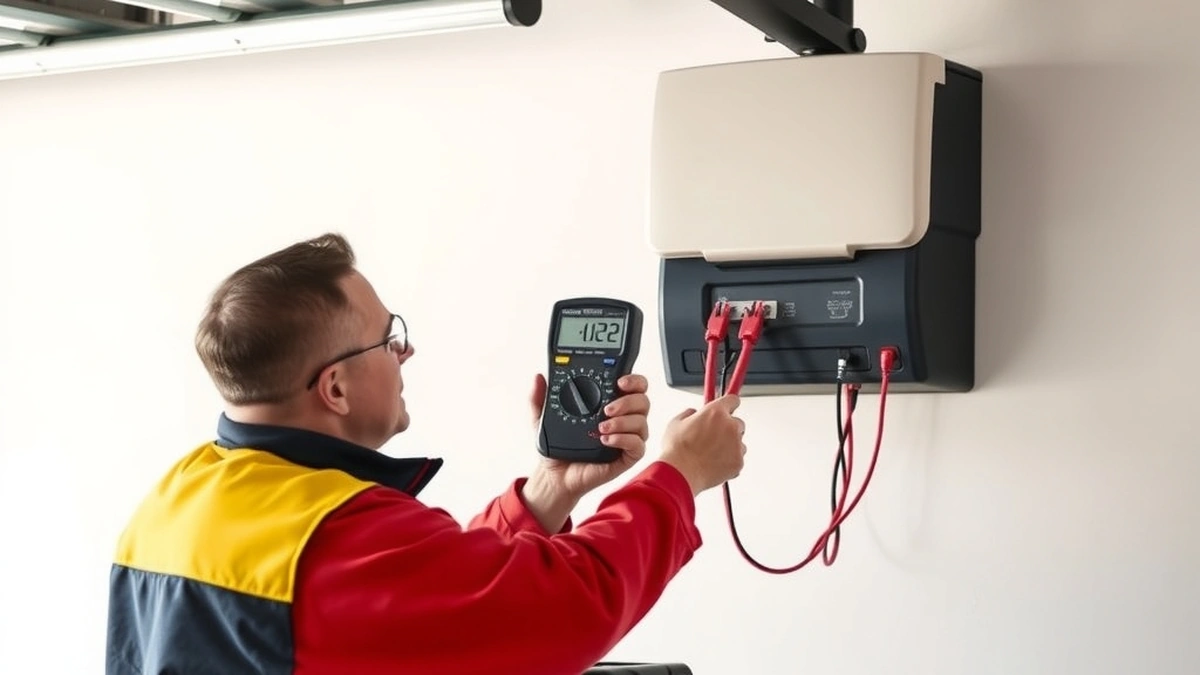
| Failed logic board | $80–$200 | $80–$150 | $150–$350 |
| Capacitor or motor failure | $60–$180 | $120–$220 | $180–$400 |
| Unit beyond repair, replaced | — | — | $300–$800 |
The expensive rows are rarer than homeowners expect, which is why the honest answer is a range and a diagnostic rather than a single phone quote.
The diagnostic visit, and when it is not a separate charge
A service call in normal hours typically runs $75 to $125, and most companies credit it against the repair if you approve the work. That structure matters when you compare quotes, because a $60 diagnostic with a $250 repair is a $310 job, while a waived $125 diagnostic with a $210 repair is a $210 job.
After-hours and weekend calls are a separate category. Emergency call-out pricing lands at $250 to $500, and that figure usually includes the premium rather than stacking on top of a standard fee. If the door is stuck open with the house exposed, that premium buys speed; if it is stuck closed and you have a second entrance, waiting until morning saves $175 to $375.
Ask two questions before anyone drives out: whether the diagnostic is credited, and whether the quote covers parts and labor together.
The arithmetic behind a $300 to $800 replacement
A chain-drive unit sized for a standard 7-foot door costs about $150 to $300 at retail. Installation runs two to three hours for a like-for-like swap on an existing rail and wiring, so at $100 to $125 an hour that adds $200 to $375. Disposal of the old unit and a new wall control add $25 to $50.
Mid-range example: $225 unit + $250 labor + $40 disposal = $515. A premium belt-drive unit with battery backup and a smart controller pushes the same job past $700, still inside the $300 to $800 band. If the rail has to be rebuilt, add $100 to $150 in labor.
If you are already replacing, the chain-drive opener cost breakdown is the cheaper reference point.
Repair versus replace: the comparison that settles it
The ratio decides it, not the age on the label.
Take a 12-year-old opener with a failed logic board quoted at $320. A comparable new opener installed is $600. The repair is 53 percent of replacement, which is past the 50 percent line most technicians use, so the recommendation is a new unit. Change the quote to $180 and the ratio drops to 30 percent, and repair is the obvious call.
Repair wins when the failure is a sensor, remote, gear, or board on a unit under about 10 years old, and when the rail, wiring, and safety hardware are sound. Replacement wins when the motor or gearing has failed, when the same opener has been repaired twice in three years, or when the unit predates 1993 and lacks a working photo-eye reversal system. Repair versus replacement covers the wider economics.
Six checks before you pay anyone
Work through these in order. They cost nothing and resolve a meaningful share of “not responding” calls.
- Plug a lamp into the outlet the opener uses. A tripped GFCI receptacle in the ceiling is common and free to reset.
- Replace the remote battery and re-pair the remote using the learn button. Confirm the wall switch still works, which proves the opener itself is alive.
- Look at the two safety sensors at the bottom of the tracks. Each should show a steady light. A flickering or dark LED means misalignment, debris, or a failed sensor.
- Check the vacation or lock mode on the wall control. A lock icon means the opener is deliberately ignoring remotes.
- Try a second remote or the keypad. If one works and one does not, the opener is fine and the problem is in the transmitter.
- Look at the door. A door sitting crooked, a slack cable, or a gap at one corner points to a door problem rather than an opener problem, and that changes the price entirely.
If all six pass and the opener still does nothing, stop. The next step is inside the housing or under tension, and neither is a homeowner job.
When the real fault is a spring or cable
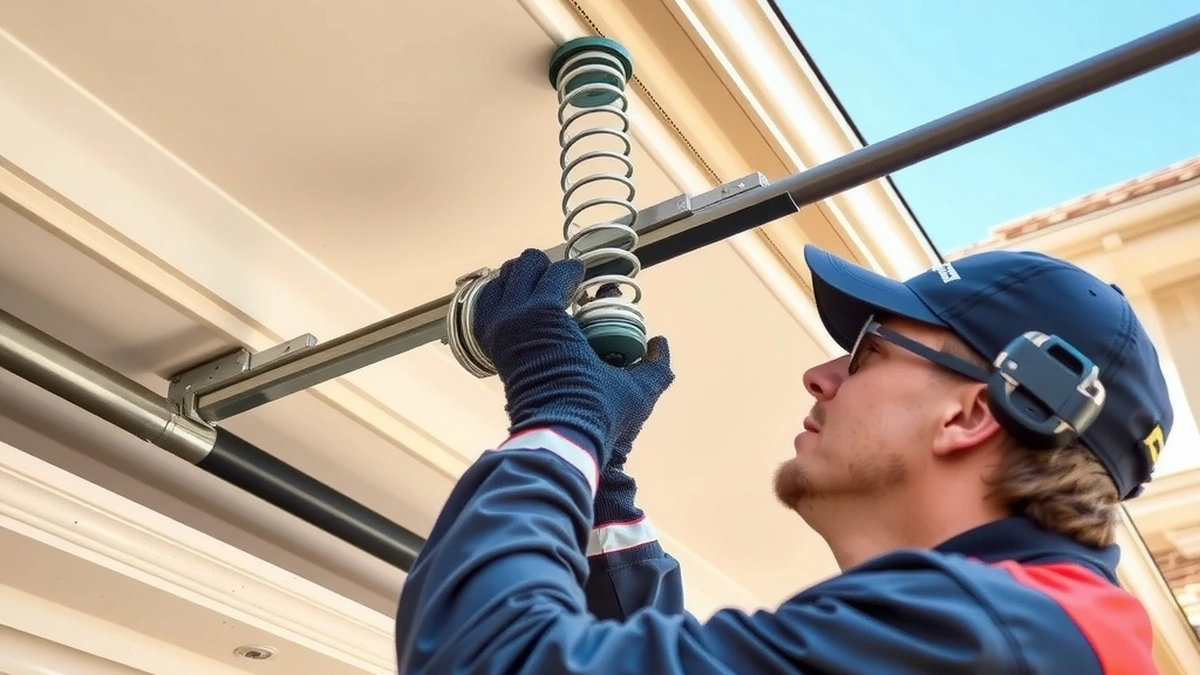
An opener that hums, clicks, or runs for a second and quits is often straining against a door it cannot lift. A broken torsion spring removes the counterbalance, so the motor is trying to lift 150 to 250 pounds of door on its own. The overload trips, and the symptom looks exactly like a dead opener.
Spring replacement runs $150 to $400 and cable repair $150 to $350. A bent or cracked panel adds $200 to $600. Those are door repairs, and no amount of opener work fixes them. See broken spring repair cost before you authorize opener work.
Springs and cables are under high tension and can cause severe injury or death when handled without proper winding bars and training. Do not cut, loosen, or adjust either one. It is the most dangerous part of the assembly.
What a fair estimate contains
A written estimate should name the failed component, state whether the part is new or refurbished, separate parts from labor, state the diagnostic fee and whether it is credited, and give a total. It should also say what happens if a second fault turns up once the opener is open.
Three red flags: a firm total quoted before anyone has seen the door, a recommendation to replace the whole unit with no reason beyond age, and pressure to authorize spring or cable work that was not part of the original complaint. Any of those justifies a second quote.
For the full picture, the garage door repair cost guide sets opener work against springs, cables, panels, and tracks. If you would rather diagnose the symptom first, start with opener troubleshooting and come back to the numbers.
Frequently asked questions
How much does it cost to fix an opener that will not respond?
Most repairs land between $75 and $350. Remotes and keypads sit at the bottom of that range, safety sensors around $75 to $150, and logic board or gear replacements at $150 to $350 including labor.
Is the service call fee separate from the repair?
Usually yes, though many companies waive it when you approve the repair. Expect a $75 to $125 diagnostic fee in normal hours. After-hours emergency visits run $250 to $500 total, which already includes the premium.
Can I avoid the bill by fixing it myself?
You can safely replace remote batteries, re-pair a remote, plug the opener into a different outlet, and clean or realign the safety sensors. Anything inside the opener housing, and any work on springs or cables, belongs to a technician.
When is replacing the opener cheaper than repairing it?
When the repair quote passes roughly half the cost of a new installed unit. A $320 board replacement against a $600 installed opener is 53 percent, which is the point where most technicians recommend replacement instead.
Why does the opener click but the door not move?
A click with no movement usually means a failed capacitor, a stripped drive gear, or a door that is binding because of a spring or track problem. The first two are opener repairs; the last one is a door repair and is priced differently.
Does homeowners insurance cover a failed opener?
Generally no. Mechanical wear and age-related failure are excluded. Insurance typically responds to sudden damage from a vehicle impact, fire, or falling object, not to a motor that stopped working on its own.
Sources
Some links are affiliate links.If you buy through them we may earn a commission at no extra cost to you. We do not accept payment for rankings. Read the full disclosure.