Broken Spring: Warning Signs You Should Not Ignore
Learn the warning signs of a broken garage door spring, why springs fail, and what to expect for repair costs and safety.
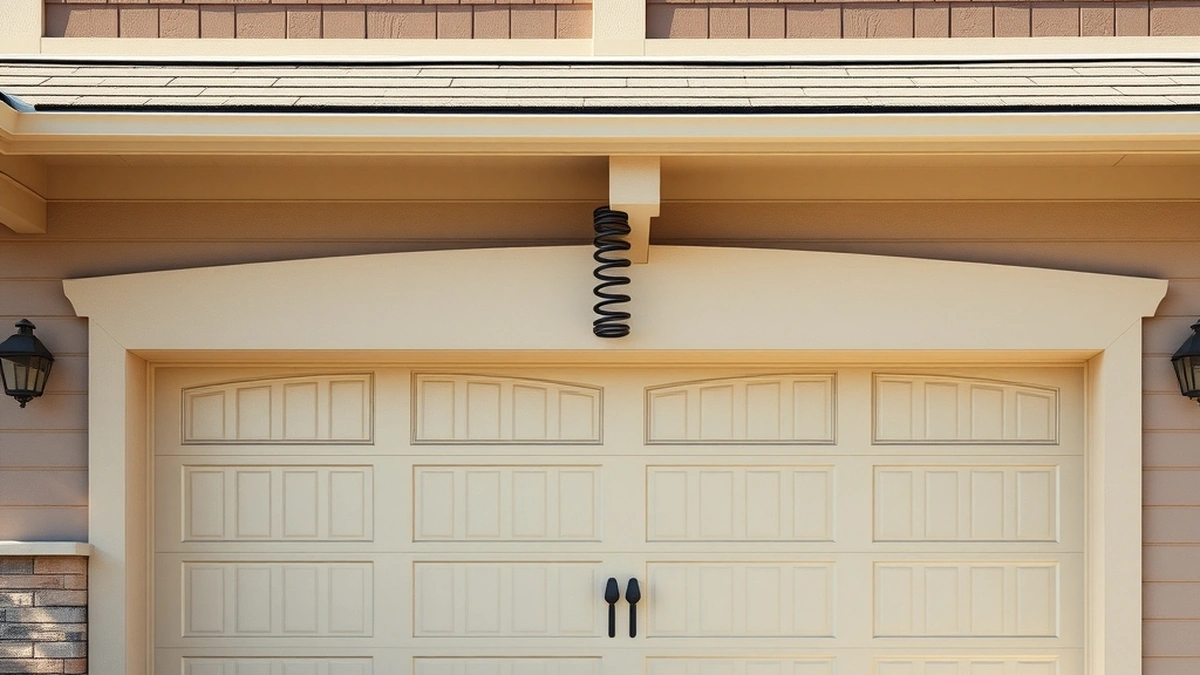
A broken spring usually means the door will not open, feels extremely heavy, or drops unevenly; stop using it and call a professional.
- Common symptom
- Door will not open or opens only a few inches
- Typical repair cost
- $150–$400 for torsion spring replacement
- Danger level
- High—springs are under extreme tension
- Recommended action
- Disconnect opener and schedule service
Some links on this page are affiliate links.If you buy through them we may earn a commission at no extra cost to you. We do not accept payment for rankings. Read the full disclosure.
A broken garage door spring is one of the most common reasons a door stops working. The warning signs include a door that will not open, a door that feels unusually heavy, or a loud bang coming from the garage. If you notice any of these symptoms, stop using the door and contact a professional.
What a Garage Door Spring Does
Garage doors are heavy. A single-car door often weighs 100 to 150 pounds, while a double-car door can weigh 200 pounds or more. Springs counterbalance that weight so the opener and the person lifting the door do not have to carry the full load.
There are two main types:
- Torsion springs: Mounted above the door on a metal shaft. They twist to store energy.
- Extension springs: Mounted on either side of the door. They stretch and contract as the door moves.
Both types operate under extreme tension. When a spring breaks, that stored energy releases all at once, which is why the failure is often sudden and loud.
Warning Signs of a Broken Spring
1. The Door Will Not Open
The most obvious sign is a door that refuses to move when you press the opener or lift it by hand. The opener may hum or run for a few seconds, then stop because it cannot lift the door without spring assistance.
2. The Door Opens Only a Few Inches
Some openers have safety sensors that detect excessive resistance. If the door rises a few inches and then stops, the springs may be broken or the door may be out of balance.
3. A Loud Bang in the Garage
A snapping torsion spring often sounds like a firecracker or a gunshot. If you hear a sharp bang and the door stops working afterward, a spring has likely fractured.
4. Visible Gap in the Spring
On a torsion spring, you may see a visible separation in the coil above the door. Extension springs may show a separated safety cable or a spring that no longer looks taut.
5. The Door Is Crooked or Falls Unevenly
If one spring breaks on a two-spring door, the door may lift unevenly. One side may rise higher than the other, or the door may sag in the middle. This puts extra stress on the opener, tracks, and cables.
6. The Door Feels Extremely Heavy
If you disconnect the opener and try to lift the door manually, it should feel relatively light if the springs are working. A broken spring makes the door feel like it weighs its full dead weight. For example, lifting a 200-pound door without spring assistance is unsafe for most people.
Why Springs Break
Springs are rated in cycles. One cycle is one opening and one closing. Many residential springs are rated for roughly 10,000 cycles. If you use your door twice a day, that is about 730 cycles per year, meaning the springs could last around 13 to 14 years. Heavy use, rust, lack of lubrication, and extreme temperature changes can shorten that life.
When a spring reaches the end of its rated life, the metal fatigues and snaps. It is not usually possible to repair a broken spring; it must be replaced.
Why You Should Not Ignore a Broken Spring
A door with a broken spring is a safety hazard. The door can fall without warning if the opener fails or if someone pulls the emergency release. Springs and cables store enough energy to cause serious injury.
Never attempt to adjust or replace torsion springs yourself. The winding cones and set screws are under high tension, and a slipping tool can cause the spring to unwind violently. Extension springs also require safety cables to contain them if they snap.
If you suspect a broken spring:
- Stop using the door.
- Disconnect the opener from the door if it is safe to do so.
- Keep people and vehicles away from the doorway.
- Call a qualified garage door technician.
What to Expect for Repair Costs
Prices vary by region, door size, and spring type. The figures below are estimates, not quotes.
| Service | Estimated Cost (USD) |
|---|---|
| Torsion spring replacement | $150–$400 |
| Cable repair | $150–$350 |
| Emergency call-out | $250–$500 |
| Opener installation | $300–$800 |
| Panel replacement | $200–$600 |
| New door installed | $800–$4,000 |
Here is how the arithmetic can add up in a typical scenario. If a technician charges a $350 service visit and replaces two torsion springs at $275 each, the parts and labor subtotal is:
$350 + ($275 × 2) = $900
If the cables also need replacement at $250, the total becomes:
$900 + $250 = $1,150
These numbers are examples only. Your actual invoice may be higher or lower depending on local labor rates and whether you need an emergency call-out outside normal business hours.
Replacing both springs at once is usually recommended even if only one has broken. The second spring has undergone the same number of cycles and is likely close to failure. Replacing both together avoids a second service visit and keeps the door balanced.
Related Repairs That May Be Needed
A broken spring can stress other parts of the system. When the spring fails, the opener motor works harder, the cables can fray, and the tracks can bend. A technician may recommend:
- Cable inspection or replacement: Worn cables can snap under the same tension that broke the spring.
- Opener inspection: If the opener strained to lift a door with a broken spring, the gear or motor may need service.
- Track and roller alignment: A crooked door can bend tracks or damage rollers.
For a broader look at repair pricing, see our guide on how much garage door repair costs. If you are weighing whether to repair or replace the door, our repair versus replacement overview can help. For routine care that can extend spring life, read our maintenance guide.
When to Replace the Whole Door
If the door is old, has multiple broken panels, or the opener is nearing the end of its life, replacing the entire door may make more sense than repeated spring repairs. A new door installed typically ranges from $800 to $4,000 depending on size, material, and insulation. Panel replacement runs $200 to $600 per panel. These are estimates, and a technician can help you compare repair versus replacement based on your door’s condition.
Bottom Line
A broken spring is not a minor inconvenience. It is a mechanical failure that makes the door unsafe to operate. Watch for a door that will not open, opens only partway, sounds like it had a bang, looks crooked, or feels too heavy to lift by hand. When in doubt, leave the door alone and call a professional.
Frequently asked questions
What does a broken garage door spring sound like?
It often sounds like a loud bang or gunshot from the garage, caused by the spring snapping under tension.
Can I open the door with a broken spring?
You should not. The door may be extremely heavy or fall suddenly, which can cause injury or property damage.
How long do garage door springs last?
Most springs are rated for about 10,000 cycles, which often translates to 7–10 years depending on daily use.
Should I replace both springs at once?
Yes. If one spring broke, the other is likely near the end of its life, and replacing both keeps the door balanced.
Is spring replacement a DIY job?
No. Torsion and extension springs store dangerous energy and should only be handled by a trained technician.
How much does emergency spring service cost?
Emergency call-outs typically range from $250 to $500, plus the cost of parts and labor.
Sources
Some links are affiliate links.If you buy through them we may earn a commission at no extra cost to you. We do not accept payment for rankings. Read the full disclosure.