Reversed Sensors: What a Fix Costs
What it costs to fix swapped or backward garage door sensors, from a free DIY swap to a $250 installed pair, with the arithmetic behind each bill.
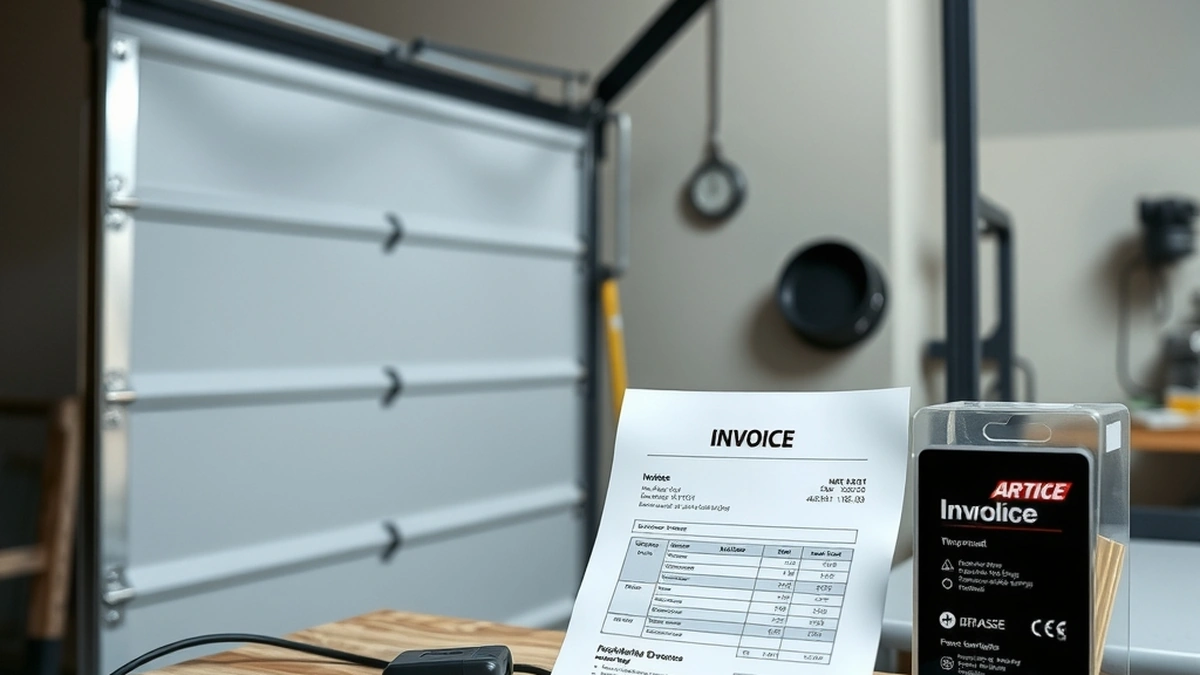
Fixing reversed sensors costs $0 if you swap the units back yourself and $75 to $250 if a technician does it. A pair runs $25 to $75 in parts; a board fault moves the bill to $150 to $350.
- DIY swap of units
- $0
- Sensor pair, parts only
- $25–$75
- Sensor pair installed
- $75–$250
- Emergency call-out
- $250–$500
Some links on this page are affiliate links.If you buy through them we may earn a commission at no extra cost to you. We do not accept payment for rankings. Read the full disclosure.
Reversed garage door sensors cost nothing to fix when the units are simply swapped and you put them back yourself. If you call a technician, expect $75 to $250 for the visit, the alignment, and a replacement pair if one is needed. The expensive version of this job only appears when the sensors turn out to be fine and the fault is in the opener’s logic board.
What You Are Paying For
A reversed sensor repair is a low-voltage job: reposition two photo-eye units, confirm their lenses face each other, and make sure the wires land on the correct terminals at the opener head. No spring is touched, no cable is under tension, and the door does not need to come apart. That is why the labor is short and the parts are cheap.
The bill has three pieces: a service call fee, labor time, and parts. Some companies fold the call fee into the first hour; others charge it separately. Ask which you are being quoted before comparing prices.
The Typical Bill, Line by Line
Using common US rates, an installed sensor pair breaks down like this:
- Sensor kit with brackets: $25 to $75
- Service call fee: $49 to $89
- Labor, 1 hour at $75 to $150 per hour: $75 to $150
- Estimated total: $75 to $250
The low end assumes a single visit with no parts — the technician re-aims or re-seats the units and leaves. The high end assumes a new pair, a short wiring repair, and an hour of diagnosis. Both are estimates; your market, the brand of opener, and whether the wire run is accessible all move the number.
If the technician also finds a frayed lifting cable while inspecting the door, cable repair adds $150 to $350. That is not a sensor cost and should appear as a separate line on the estimate.
DIY Versus Professional
Most reversed-sensor calls do not need a truck. The table below shows where the money goes for each path.
| Approach | Parts | Labor | Typical total | Best for |
|---|---|---|---|---|
| Swap units back yourself | $0 | $0 | $0 | Units on the wrong sides, lens facing the wall |
| Re-aim and clean yourself | $0 | $0 | $0 | Blinking light after a bumped bracket |
| Repair wire yourself | $10–$20 | $0 | $10–$20 | Visible cut or pulled splice |
| Handyman visit | $0–$75 | $50–$90/hr | $75–$150 | Simple mechanical fix, no diagnosis |
| Garage door technician | $0–$75 | $75–$150/hr | $75–$250 | Unknown cause, older opener, warranty work |
The DIY row is not a consolation prize. Swapping two units and re-aiming them is a fifteen-minute task with the opener unplugged, and it resolves the majority of reversed-sensor complaints. Our step-by-step walkthrough is in reversed sensors repair.
When the Opener Is the Real Problem
Roughly the only way this job gets expensive is when new sensors will not work because the opener head is at fault. A failed sensor terminal, a damaged logic board, or a transformer that no longer feeds the sensor circuit all produce the same symptom from the driver’s seat: the door will not close.
Board-level work typically runs $150 to $350. That is worth doing on an opener under about 10 years old that is otherwise quiet and reliable. On a 15-year-old unit, a new opener installed at $300 to $800 is the better purchase, because it includes a new board, new safety hardware, and a warranty that the repair will not have.
Set the two against each other plainly. A $300 board repair on a 15-year-old opener leaves you with a 15-year-old motor, gear, and capacitor. A $300 to $800 replacement resets the clock on all of it. Below 10 years, the math flips and the repair wins.
Emergency and After-Hours Pricing
Sensor faults rarely justify an emergency call. The door stays open or stays shut, and either can usually wait for a weekday appointment. An emergency call-out adds $250 to $500 on top of the repair, which can turn a $150 sensor job into a $400 to $650 bill.
There are two exceptions. If the garage is your only secure entry and the door is stuck open overnight, the premium buys security. If the door is stuck closed with a car inside and someone needs it for work, the same applies. Otherwise, book the next available slot and use the manual release to open the door by hand — provided the springs are healthy and the door lifts easily.
What Moves the Price
Five things change the quote more than anything else:
- Access. Sensors mounted behind stored shelving or inside a finished wall take longer to reach.
- Wiring condition. A clean run to the opener head is a ten-minute check. A stapled, spliced, or painted-over run is an hour.
- Opener brand. Proprietary connectors and non-standard voltages limit parts options and raise the kit price.
- Door height and ceiling clearance. Tall doors put the opener head higher and slow the work.
- Bundle work. If the technician is already there for a tune-up or a roller replacement, adding a sensor check often costs little or nothing extra.
That last point is the practical one. A $75 to $150 tune-up that includes sensor alignment is cheaper than a standalone $75 to $250 sensor call, and it catches the next problem before it strands the car.
Getting an Accurate Quote
A phone estimate for sensor work is a guess. Use this sequence to get a number that holds.
- Describe the exact symptom: reverses after a few inches, will not close from the remote, or closes only while the wall button is held.
- Confirm whether the door closes when you hold the wall control. That single detail tells the technician the sensors, not the springs, are the fault.
- Ask whether the quoted price includes the sensor pair, or parts only.
- Ask whether the service call fee is separate from the first hour of labor.
- Get the number in writing before work starts, including the diagnostic fee if the fault turns out to be the board.
For context on what other door faults cost, our guides to torsion spring cost and snapped cable cost use the same line-item approach. If you are comparing providers, best garage door repair covers what to look for. And if you want to know whether the problem is worth a call at all, reversed sensors warning signs lists the symptoms in the order they usually appear.
Bottom Line
Reversed sensors are one of the cheapest garage door faults to fix. A DIY swap is free, a repaired wire is $10 to $20, and a professional visit with a new pair is $75 to $250. The bill only reaches the hundreds when the opener’s board is the real fault, at $150 to $350 for a repair or $300 to $800 for a replacement. Skip the $250 to $500 emergency premium unless the door is stuck open and the garage is your only lock.
Frequently asked questions
How much does it cost to fix reversed garage door sensors?
Nothing if the units are simply swapped and you put them back yourself. A technician visit to swap, realign, or rewire them typically runs $75 to $250 including parts.
Are garage door safety sensors expensive?
No. A universal pair with brackets costs about $25 to $75. Labor, not parts, makes up most of a professional bill.
Will a handyman fix reversed sensors cheaper than a garage door company?
Sometimes, on labor rate. A handyman may charge $50 to $90 an hour against $75 to $150 for a door specialist, but a specialist is more likely to diagnose a board fault correctly on the first visit.
Does warranty cover reversed sensors?
Usually not. Reversed wiring from a remodel, a bumped bracket, or a damaged wire is treated as installation or accidental damage, not a manufacturing defect.
What does an emergency sensor repair cost?
After-hours calls add $250 to $500 on top of the repair. Sensor work is rarely urgent enough to justify that premium unless the door is stuck open.
Should I replace the opener instead of paying for sensor repairs?
Only if the opener is over about 12 years old and the board has failed. Below that age, a $75 to $250 sensor fix is almost always the better spend than a $300 to $800 replacement.
Sources
Some links are affiliate links.If you buy through them we may earn a commission at no extra cost to you. We do not accept payment for rankings. Read the full disclosure.