Common Torsion Spring Problems and Fixes
Learn how to spot torsion spring problems, understand repair costs, and why spring work is best left to pros.
Torsion spring problems usually mean a broken spring that must be replaced. Expect to pay $150–$400 for professional torsion spring replacement in the US.
- Typical repair cost
- $150–$400
- DIY risk
- High — springs store lethal force
- Average spring life
- 7–12 years or 10,000–20,000 cycles
- Emergency call-out
- $250–$500
Some links on this page are affiliate links.If you buy through them we may earn a commission at no extra cost to you. We do not accept payment for rankings. Read the full disclosure.
Torsion spring problems usually mean the spring above your garage door has broken or lost tension. When that happens, the door becomes difficult or impossible to lift, and the opener may strain or fail trying to do the work the spring once did. Because torsion springs are wound under extreme tension, any inspection or replacement should be handled by a qualified technician.
What a Torsion Spring Does
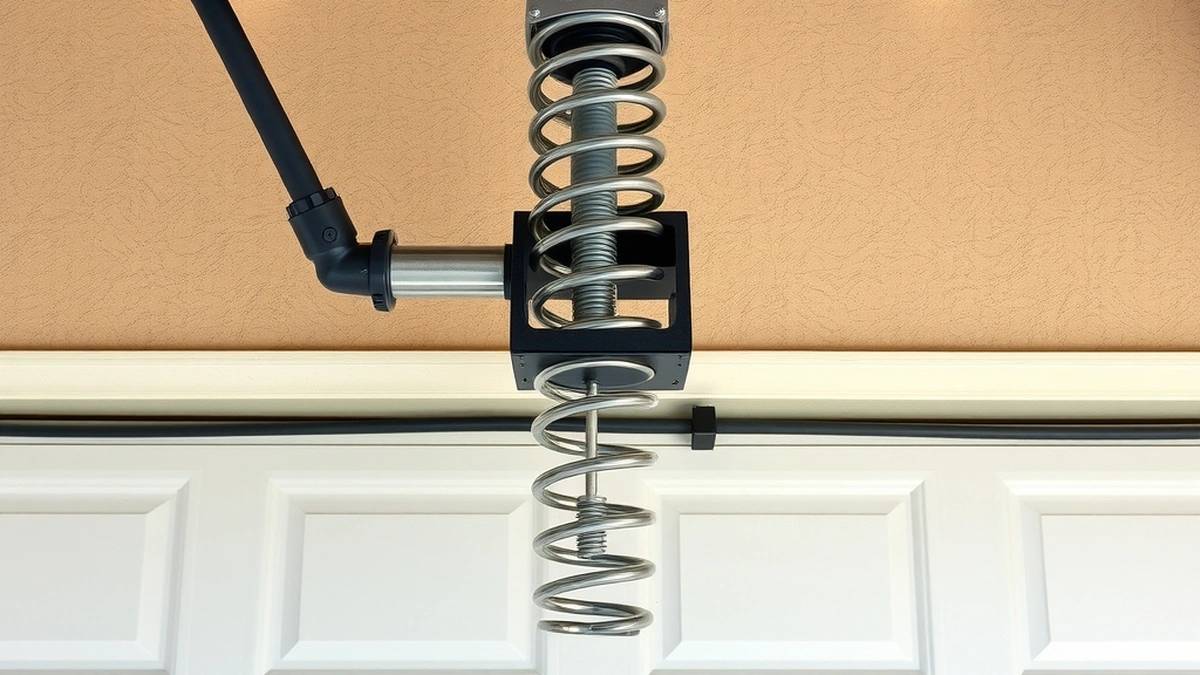
A torsion spring sits on a metal shaft directly above the garage door opening. As the door closes, the spring winds up and stores energy. As the door opens, that energy unwinds to help lift the door. Most residential doors weigh between 130 and 350 pounds, depending on size, insulation, and whether they have windows. A properly sized spring counterbalances most of that weight so the door can be opened by hand or by a standard opener.
If the spring breaks, that counterbalance vanishes. The door effectively returns to its full dead weight. A 200-pound door with a broken spring still weighs 200 pounds to the opener or to anyone trying to lift it manually.
Common Torsion Spring Problems
The most frequent issue is a complete spring break. Springs are rated by cycle life, commonly 10,000 to 20,000 cycles. One cycle is a single open and close. If you use your garage door as your main entry, you might run 2,000 to 3,000 cycles per year, which puts spring replacement on the horizon roughly every 4 to 10 years.
Other problems include:
- Rust and corrosion, which eat into the steel and create weak points
- Improper winding, where the spring was installed with the wrong tension for the door weight
- Gap in the coil, visible as a separation in the spring where it snapped
- Door imbalance, where one spring on a two-spring door breaks and the remaining spring cannot carry the load
A visible gap in the spring is the clearest sign of a break. You may also hear a loud bang from the garage at the moment of failure, caused by the sudden release of stored energy.
Why DIY Spring Replacement Is Dangerous
Torsion springs store enough force to lift a heavy door. When a spring breaks or is unwound incorrectly, that force releases instantly. Winding bars can slip or be ejected, and the spring itself can cause severe injury or death. Cables under tension can also whip or snap.
Professional technicians use proper winding bars, lock the shaft, and release tension in a controlled sequence. They also check the cables, drums, and bearings while the spring is accessible. For these reasons, Garage Door Lab does not recommend DIY torsion spring replacement. If you want to understand what professional repair involves before calling a technician, see our overview of garage door repair installation.
What Professional Replacement Costs
Torsion spring replacement typically costs between $150 and $400, depending on door size, spring type, and local labor rates. That range usually includes the spring, labor, and a basic safety inspection.
Here is how the math can break down for a standard single-car door:
- Service call and labor: $100–$200
- Torsion spring part: $50–$200
- Total estimate: $150–$400
If both springs on a double-car door need replacement, the cost may sit near the top of that range or slightly above it because two springs and additional labor are involved.
Related repairs sometimes surface at the same time. Cable repair runs $150–$350. If the opener has been strained by a broken spring and needs replacement, opener installation costs $300–$800. An emergency call-out outside normal business hours can add $250–$500. These figures are estimates, and actual quotes vary by region and door configuration.
For broader pricing context, you can review our guide to how much garage door repair costs.
What Happens If You Ignore a Broken Spring
Continuing to use the opener with a broken spring can burn out the motor or strip the drive gears. The opener is designed to move a balanced door, not to dead-lift a 200-pound slab. Safety sensors may also behave unpredictably if the door does not travel smoothly.
A door with a broken spring can also fall if the opener fails or if someone disengages the release cord. That creates an immediate impact hazard for people, vehicles, and anything stored beneath the door.
Replacement Versus New Door
If your door is older and the springs are original, it is worth weighing repair against replacement. New door installation ranges from $800 to $4,000, while panel replacement costs $200–$600. A door with multiple broken panels, rusted sections, or outdated hardware may be a better candidate for full replacement than repeated spring repairs.
For a single broken spring on an otherwise sound door, spring replacement is usually the economical choice. For more on deciding between repair and replacement, see our comparison of garage door repair versus garage door opener.
Maintenance Can Extend Spring Life
You cannot make a spring last forever, but you can reduce wear. Lubricate the spring two or three times per year with a silicone-based garage door lubricant. Do not use heavy grease, which attracts grit. Visually inspect the coils every few months for gaps, rust, or fraying cables.
Test the door balance seasonally. Disconnect the opener and lift the door halfway by hand. It should stay in place. If it drifts up or down, the springs are out of balance and need adjustment. That adjustment is another job for a professional, not a DIY task.
Routine maintenance is covered in our garage door repair maintenance guide.
When to Call a Technician
Call a professional if you notice a gap in the spring, the door will not open manually, the opener strains or reverses immediately, or the door closes too fast. Do not attempt to loosen, tighten, or remove the spring yourself. The risk of injury is too high, and the cost of a service visit is far lower than the cost of a hospital visit.
If you are researching options before hiring, our directory of best garage door repair services can help you find qualified local providers.
Torsion spring problems are common, but they are not minor. A broken spring disables the door’s counterbalance, puts stress on the opener, and creates a real safety hazard. Professional replacement usually costs $150–$400 and restores safe, reliable operation. Treat any spring issue as urgent, and leave the winding bars to someone trained to use them.
Frequently asked questions
What does a broken torsion spring sound like?
A loud bang or snap in the garage, often mistaken for a gunshot, is common when a torsion spring breaks under tension.
Can I open the door with a broken spring?
You should not. The door may weigh 150 pounds or more and can crash down without warning, causing injury or damage.
How long do torsion springs last?
Most residential torsion springs are rated for 10,000 to 20,000 cycles, which typically equals about 7 to 12 years of normal use.
Should I replace both springs?
Yes. If your door has two springs and one breaks, replacing both keeps the door balanced and prevents uneven wear.
Is DIY torsion spring repair safe?
No. Torsion springs are wound under extreme tension and can cause serious injury or death if they unwind unexpectedly.
Does a broken spring damage the opener?
It can. The opener may strain or burn out trying to lift a door it was not designed to counterbalance alone.
Sources
Some links are affiliate links.If you buy through them we may earn a commission at no extra cost to you. We do not accept payment for rankings. Read the full disclosure.