Sectional Door vs Torsion Spring: What's the Difference
Learn how sectional doors and torsion springs work together, why springs fail, and what repairs typically cost in the US.
A sectional door is the door itself; a torsion spring is the hardware that lifts it. You compare parts, not two competing products.
- What is a sectional door
- Door made of horizontal panels that slide up on tracks
- What is a torsion spring
- Coiled spring mounted above the door that stores lifting energy
- Torsion spring replacement
- $150–$400
- Full new door installed
- $800–$4,000
- Emergency call-out
- $250–$500
Some links on this page are affiliate links.If you buy through them we may earn a commission at no extra cost to you. We do not accept payment for rankings. Read the full disclosure.
A sectional door and a torsion spring are not two different types of garage doors. A sectional door is the door itself, built from horizontal panels that travel up along tracks. A torsion spring is the tightly wound coil mounted above the door that stores the energy needed to lift it. If you are comparing the two, you are really looking at how a door and its lifting hardware work together, and what happens when one of them fails.
This guide explains what each part does, how they interact, what can go wrong, and what you can expect to pay for common repairs. Safety comes first: torsion springs and cables are under extreme tension and cause serious injuries every year. If your spring is broken or your door will not stay open, stop using it and call a qualified technician.
What Is a Sectional Door?
A sectional garage door is the most common residential door style in the United States. It consists of several horizontal panels connected by hinges. As the door opens, the panels curve and move upward along vertical and horizontal tracks until the door sits parallel to the ceiling inside the garage.
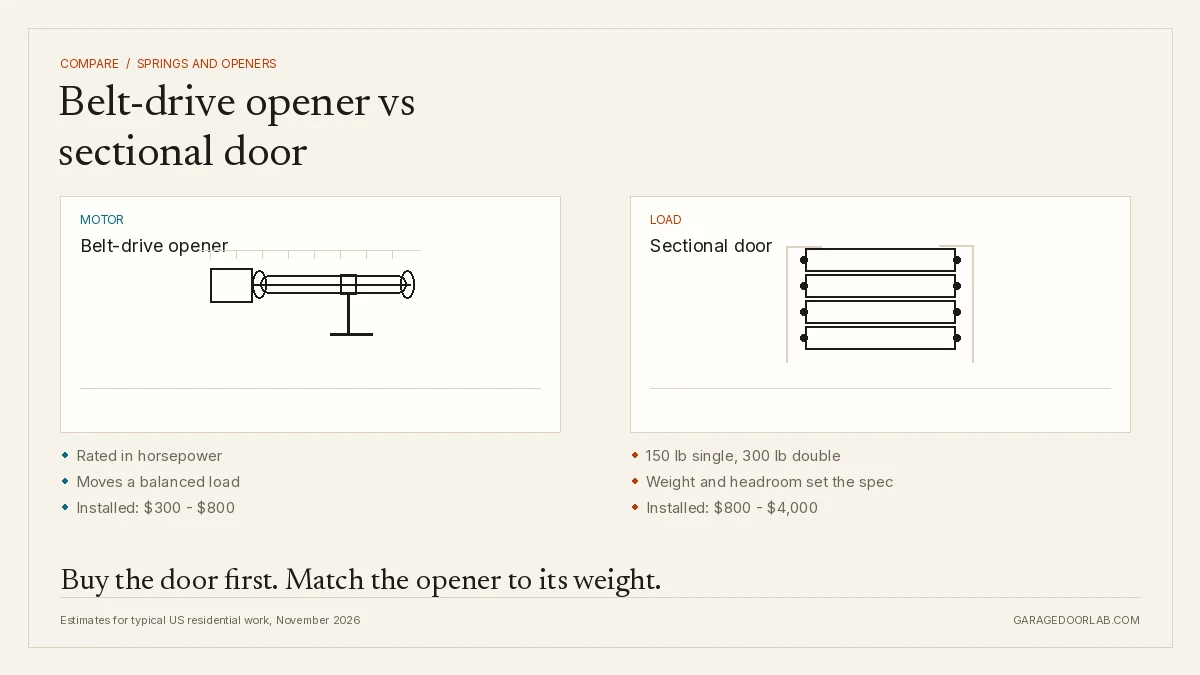
Sectional doors come in different materials, including steel, aluminum, wood, and composite. They can be insulated or non-insulated, and they range from single-car widths of about 8 to 9 feet up to double-car doors of 16 feet or more. A typical single sectional door might weigh between 100 and 200 pounds, while a large insulated double door can weigh 300 pounds or more.
Because the door is heavy, it cannot be lifted by hand or by a standard opener alone without assistance. That is where the spring system comes in.
What Is a Torsion Spring?
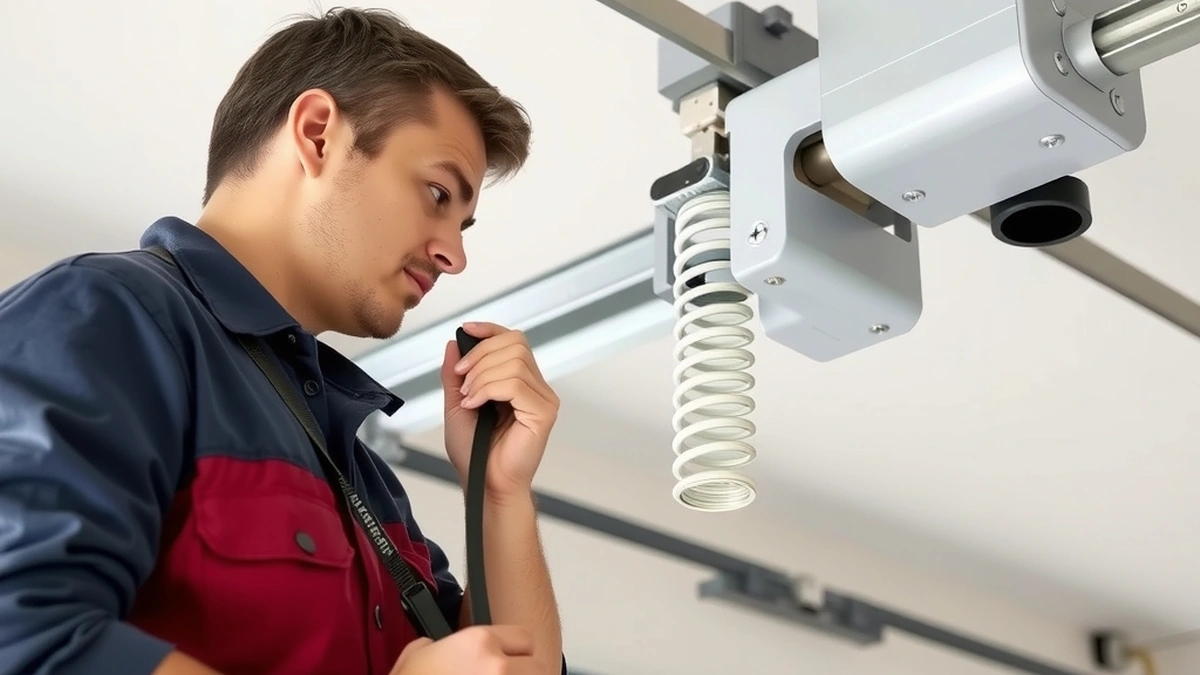
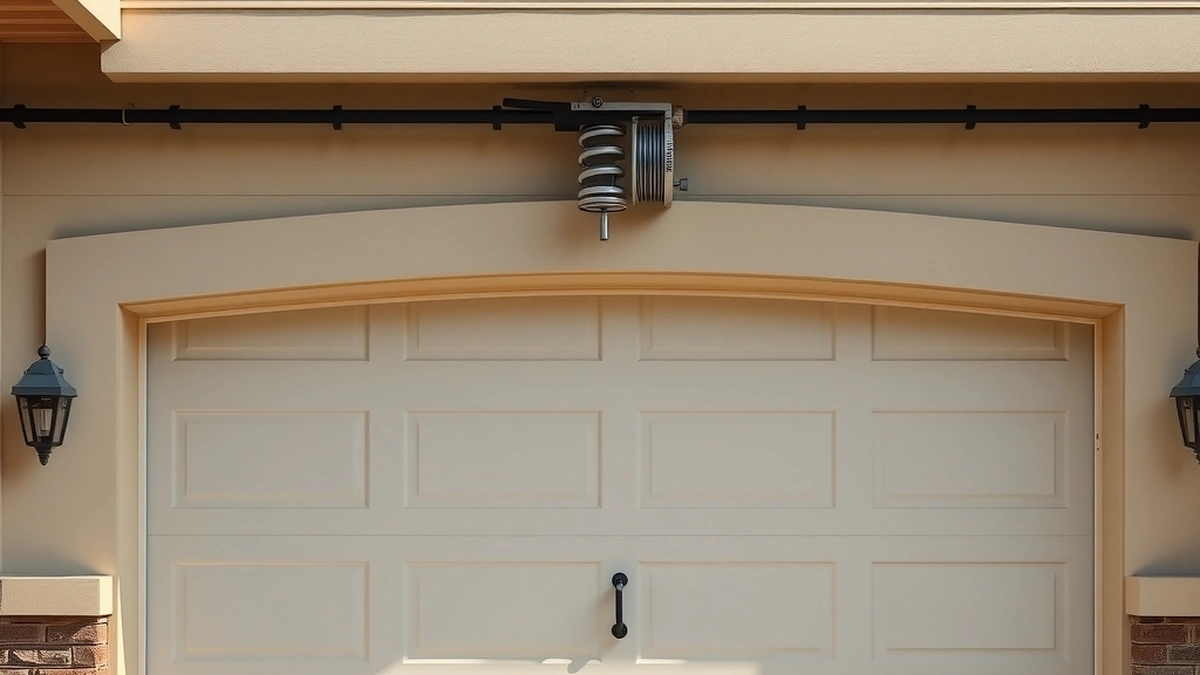
A torsion spring is a metal coil mounted on a shaft directly above the garage door opening. When the door is closed, the spring is wound tight. As the door opens, the spring unwinds and transfers torque through the shaft and drums to lift the door. When the door closes, the spring winds back up.
Torsion springs are rated in cycles. One cycle is one opening and one closing. Many residential springs are rated for roughly 10,000 cycles. If you use your garage door twice a day, that is about 730 cycles per year, meaning the spring might last around 13 to 14 years in theory. In practice, rust, poor lubrication, extreme temperatures, and lack of maintenance often shorten that life.
When a torsion spring breaks, it usually snaps with a loud bang. The door may suddenly feel extremely heavy, or it may refuse to open at all. In some cases, the door will open a few inches and then stop because the opener cannot carry the full weight without spring assistance.
How Sectional Doors and Torsion Springs Work Together
The door and the spring are a matched system. The spring is sized to the weight of the door. If you install a heavier insulated sectional door but keep the old springs, the springs may be under-sized. The opener will strain, the tracks may bend, and the springs will wear out faster.
Here is a simplified example of how the load works. Suppose a double sectional door weighs 250 pounds. A properly sized torsion spring is designed to counterbalance most of that weight, leaving perhaps 10 to 15 pounds of effective force for the opener or a person to manage. If the spring breaks, the full 250 pounds is suddenly unsupported. Most residential openers are not built to lift that dead weight repeatedly, and trying to operate the door can strip gears or bend the rail.
This is why you should never judge a door without also checking the spring. A door panel might look fine, but if the spring is worn, the door is unsafe to operate.
Common Failure Points and Repair Costs
Sectional doors and torsion springs fail in different ways. Knowing which part is at fault helps you understand the repair estimate.
Torsion Spring Replacement
When a torsion spring breaks, it must be replaced. Springs are usually replaced in pairs on double doors so both sides age evenly. The typical cost for professional torsion spring replacement is $150–$400. This includes the spring, labor, and a safety inspection. Attempting this yourself is dangerous. The spring stores enough energy to cause severe injury or death if it unwinds unexpectedly.
Cable Repair
Lifting cables run from the bottom brackets of the door to the cable drums on the torsion shaft. If a spring breaks, the cable can slip or fray. Cable repair typically costs $150–$350. Like springs, cables are under tension and should only be handled by a professional.
Panel Replacement
If a car backs into a sectional door, one panel may dent or crack. Individual panel replacement usually costs $200–$600, depending on the door material and panel size. In some cases, matching an older door’s color and style is difficult, and replacing the whole door makes more sense.
New Door Installed
If the door is old, warped, or no longer available in matching panels, a new sectional door installed typically costs $800–$4,000. The price depends on size, material, insulation, windows, and local labor rates.
Emergency Call-Out
If your door breaks at night or on a weekend, an emergency call-out can add $250–$500 on top of the repair cost. Regular maintenance helps avoid these after-hours failures.
Safety First: Springs and Cables Are Dangerous
Torsion springs and lifting cables are under high tension. A broken spring can release with enough force to cause serious injury, and a snapping cable can whip across the garage. Never attempt to adjust, remove, or replace a torsion spring or cable unless you are a trained technician with the proper tools.
If you notice any of the following, stop using the door and call a professional:
- A loud bang from above the door
- The door feels unusually heavy when lifted manually
- The door will not stay open halfway
- Visible gaps in the spring coil
- Frayed or slack cables
- The door moves unevenly or jerks during operation
Regular maintenance, including lubrication of the spring and inspection of the cables, can extend the life of the system. However, maintenance does not make DIY spring replacement safe.
Cost Comparison Examples
To put the numbers in context, here are a few hypothetical repair scenarios using the standard price ranges.
Scenario 1: Broken torsion spring on a double sectional door.
- Torsion spring replacement: $150–$400
- Estimated total: $150–$400
Scenario 2: Broken spring plus a frayed cable.
- Torsion spring replacement: $150–$400
- Cable repair: $150–$350
- Estimated total: $300–$750
Scenario 3: Dent in one panel plus an aging spring.
- Panel replacement: $200–$600
- Torsion spring replacement: $150–$400
- Estimated total: $350–$1,000
Scenario 4: Door is 20 years old, panels are delaminating, and the spring is broken.
- New sectional door installed: $800–$4,000
- Estimated total: $800–$4,000
These are estimates. Actual prices vary by region, door size, and contractor.
When to Repair vs Replace
If your sectional door is in good condition and only the torsion spring has failed, spring replacement is usually the right choice. At $150–$400, it is far less expensive than a new door.
Consider replacing the entire door if:
- Multiple panels are damaged and matching replacements are unavailable
- The door is sagging or warped
- You want better insulation and the current door is non-insulated
- The door has required repeated repairs in the last 12 months
- The tracks or hardware are rusted beyond safe adjustment
A new sectional door installed typically runs $800–$4,000. That is a larger upfront cost, but it comes with new hardware, new springs, and often a warranty.
Maintaining Your Sectional Door and Springs
You can extend the life of your door and spring system with basic care. Keep the tracks clean and free of debris. Lubricate the torsion spring, hinges, and rollers with a garage door lubricant every few months. Check the balance by disconnecting the opener and lifting the door halfway. If it stays put, the spring is likely still balanced. If it drifts up or down, call a technician for an adjustment.
Never adjust the spring tension yourself. Even a small mistake with a winding bar can lead to injury. If you are unsure whether your door needs service, it is cheaper to schedule a routine inspection than to pay for an emergency call-out at $250–$500 after a failure.
For more on repair pricing, see our guide to garage door repair costs. If you are weighing whether to fix the door or the opener, our comparison of garage door repair versus opener repair may help. And if you are thinking about doing any work yourself, read our overview of DIY garage door repair before picking up a tool.
A sectional door and a torsion spring are partners, not competitors. The door provides the barrier and insulation; the spring provides the lifting force. When one fails, the other cannot do the job alone. Treat both with respect, and leave spring work to the professionals.
Next, compare how much does garage door repair cost, garage door repair installation, garage door repair repair before you commit.
Frequently asked questions
Is a sectional door the same as a torsion spring?
No. A sectional door is the physical door made of panels; a torsion spring is the hardware above it that helps lift the door.
Can I replace a torsion spring myself?
No. Torsion springs are under extreme tension and can cause serious injury or death if handled without proper tools and training.
How long do torsion springs last?
Most residential torsion springs are rated for about 10,000 cycles, which often equals 7 to 10 years of typical use.
What does torsion spring replacement cost?
Professional torsion spring replacement typically costs between $150 and $400, depending on door size and spring type.
Do all sectional doors use torsion springs?
No. Some sectional doors use extension springs instead, though torsion springs are common on heavier and modern residential doors.
When should I call a pro for my sectional door?
Call a pro if the door will not stay open, makes loud banging noises, or shows visible gaps in the spring coil.
Sources
Some links are affiliate links.If you buy through them we may earn a commission at no extra cost to you. We do not accept payment for rankings. Read the full disclosure.