Chain-Drive Opener vs Torsion Spring: What Each Part Does
A chain-drive opener lifts the door; a torsion spring balances its weight. Learn the difference, repair costs, and why spring work is dangerous.
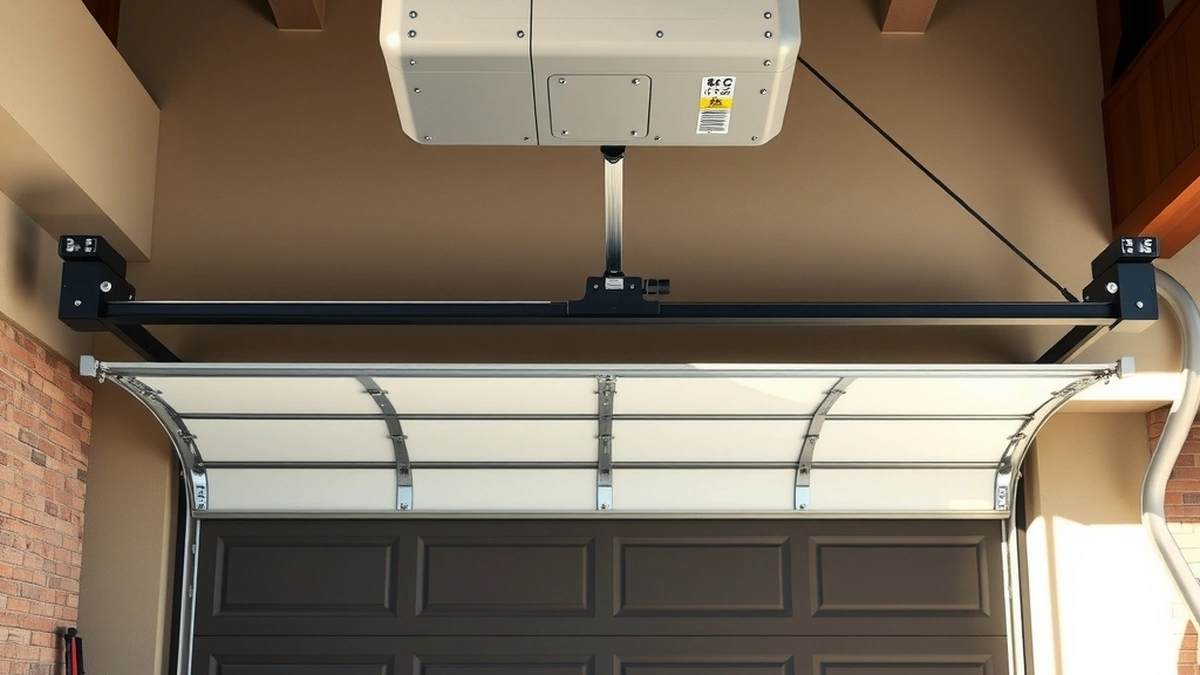
A chain-drive opener is the motorized unit that pulls the door up; a torsion spring is the coiled steel above the door that offsets its weight so the opener and cables do not carry the full load.
- Chain-drive opener role
- Motorized lifting device mounted to the ceiling
- Torsion spring role
- Coiled spring above the door that counterbalances weight
- Torsion spring replacement
- $150-$400
- Opener installation
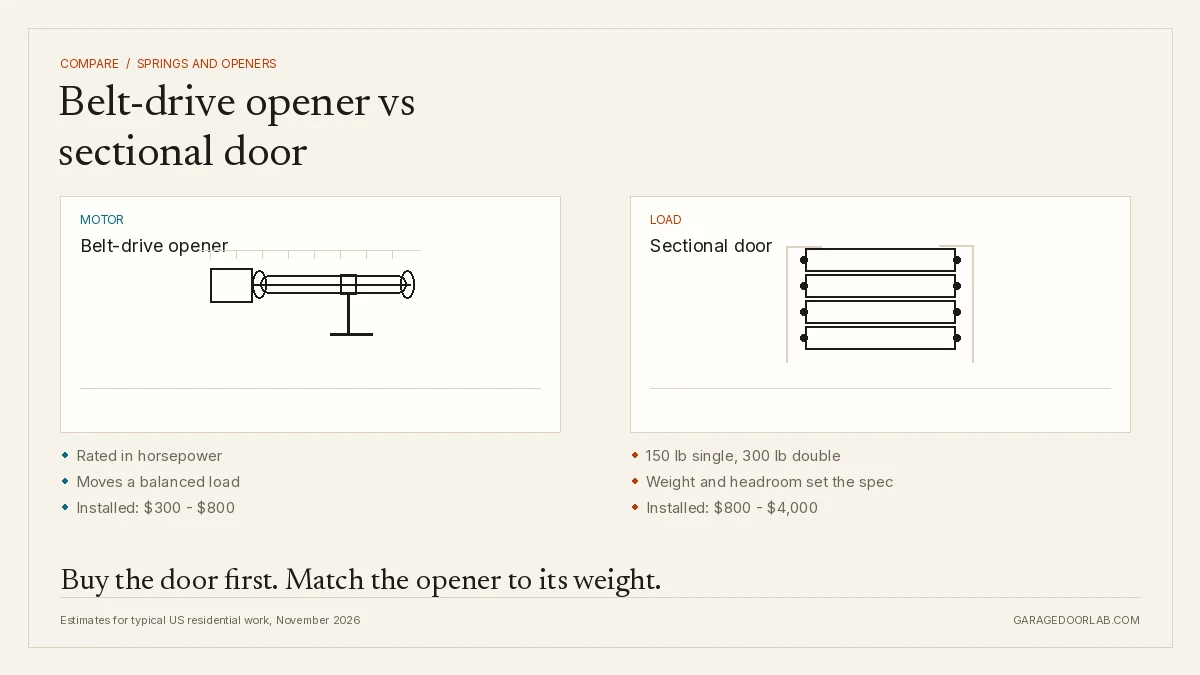
- $300-$800
- Emergency call-out
- $250-$500
Some links on this page are affiliate links.If you buy through them we may earn a commission at no extra cost to you. We do not accept payment for rankings. Read the full disclosure.
A chain-drive opener and a torsion spring are not competing products. They are two different parts of the same garage door system, and one cannot replace the other. The opener is the motorized device that moves the door, while the torsion spring is the tightly wound steel coil that offsets the door’s weight. Confusing them can lead to the wrong repair call, wasted money, and, in the case of springs, a serious safety hazard.
This guide explains what each component does, how they work together, what repairs typically cost, and why only a qualified technician should handle spring or cable work.
What a Chain-Drive Opener Does
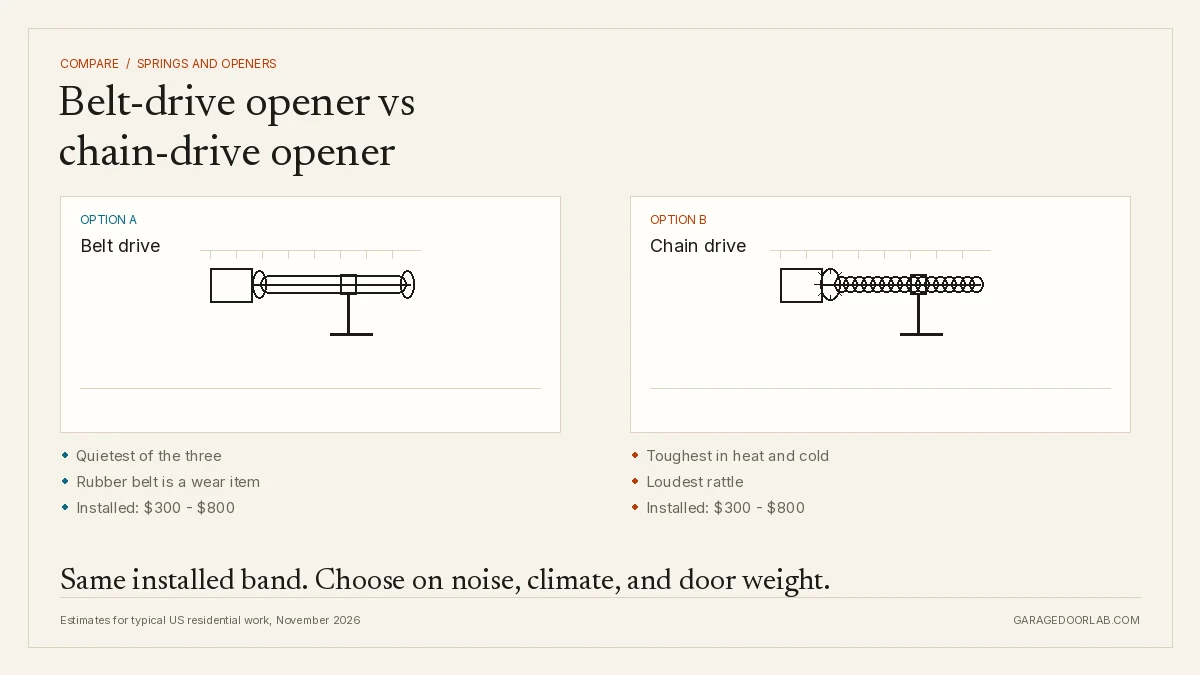
A chain-drive opener is a motorized lifting unit mounted to the garage ceiling. It uses an electric motor, a drive chain, and a trolley connected to the door to pull the door open and push it closed. When you press the wall button or remote, the motor turns the chain, which moves the trolley along a rail.
Chain-drive openers are common because they are durable and generally less expensive than belt-drive or direct-drive models. The trade-off is noise: the metal-on-metal chain produces more sound during operation, which can be noticeable if the garage is attached to a bedroom or living space.
Installation for a new chain-drive opener typically falls between $300 and $800, including the unit and standard labor. If your existing opener is failing, replacement in that range is a reasonable estimate. For more on what goes into professional door and opener work, see our overview of garage door repair and installation.
What a Torsion Spring Does
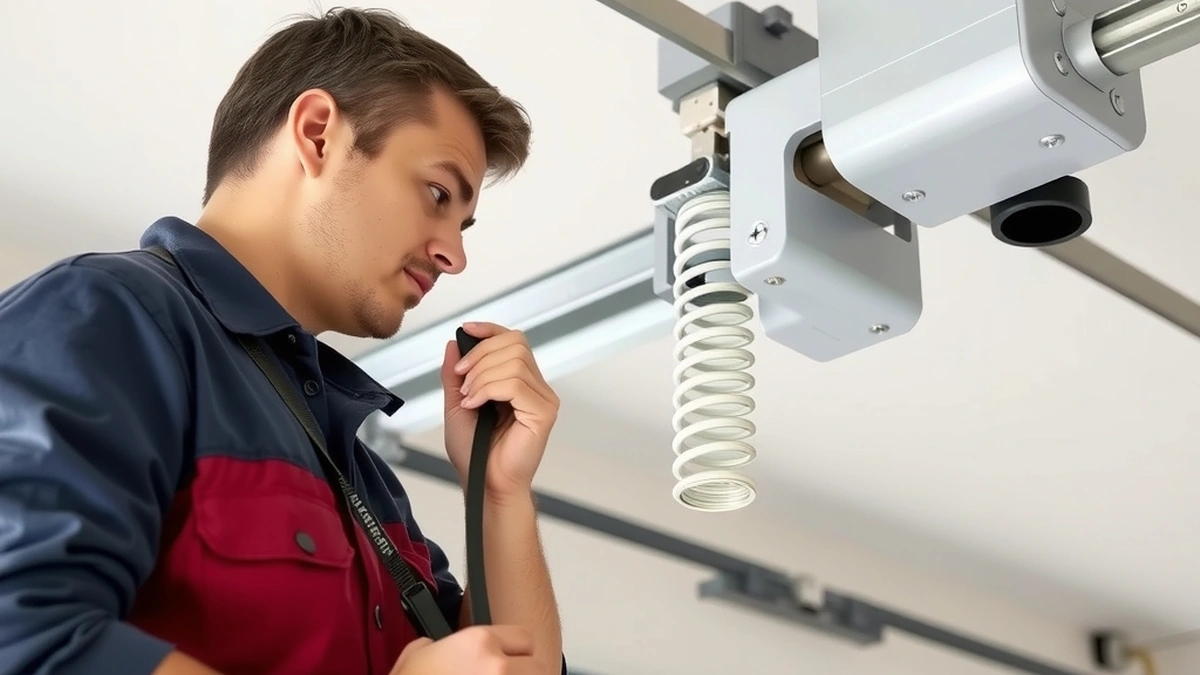
A torsion spring is mounted on a metal shaft directly above the garage door opening. As the door closes, cables attached to the bottom corners wind the spring, storing energy. As the door opens, that energy unwinds and helps lift the door. The spring counterbalances most of the door’s weight, so the opener and cables do not have to lift the full load alone.
Residential garage doors often weigh between 130 and 350 pounds, depending on size, insulation, and material. A standard 16-by-7-foot insulated steel door might weigh roughly 250 pounds. Without a spring, an opener would need to move that entire weight every cycle. With a properly sized torsion spring, the effective lifting force required at the door is reduced to a small fraction of the total weight, often just 10 to 15 pounds of resistance when the door is disconnected from the opener.
Because torsion springs are under extreme tension, they store enough energy to cause severe injury or death if they snap or are released without proper tools and training. A broken spring can also send cables whipping across the garage. For this reason, spring adjustment or replacement is not a DIY task.
How the Two Components Work Together
The opener and the torsion spring have distinct jobs, but they depend on each other. The spring handles weight balance; the opener handles motion. If the spring is broken or unbalanced, the opener may strain, the motor may overheat, or the door may slam shut. If the opener fails, a balanced door can still usually be lifted manually, though it will be heavy.
Here is a simplified division of labor:
- Torsion spring: offsets the door’s weight so the system is balanced.
- Lift cables: transfer spring force to the bottom corners of the door.
- Chain-drive opener: provides the motorized force to start and control door travel.
- Safety sensors and reversal mechanisms: stop the door if an obstruction is detected.
If any one of these elements fails, the whole system can become unsafe or inoperable.
Typical Repair and Replacement Costs
Prices below are estimates and vary by region, door size, and labor rates. Always request a written quote before authorizing work.
| Repair or service | Estimated cost (USD) |
|---|---|
| Torsion spring replacement | $150-$400 |
| Cable repair | $150-$350 |
| Opener installation | $300-$800 |
| Panel replacement | $200-$600 |
| New door installed | $800-$4,000 |
| Emergency call-out | $250-$500 |
To illustrate how costs add up, imagine a homeowner needs both a broken torsion spring replaced and a new chain-drive opener installed. Using mid-range estimates:
- Torsion spring replacement: approximately $275 (midpoint of $150-$400)
- Opener installation: approximately $550 (midpoint of $300-$800)
- Combined estimate: $275 + $550 = $825
That total does not include an emergency call-out fee, which can add $250-$500 if service is needed after hours or on a weekend.
If the door itself is damaged beyond panel repair, a new door installed can run $800-$4,000, which is significantly more than maintaining the existing door and opener. For a broader look at repair pricing, see how much garage door repair costs.
Safety Warning: Springs and Cables Are Dangerous
Torsion springs and lift cables are under high tension at all times when the door is installed. A standard torsion spring can be wound with enough force to lift a 200-pound door. If a winding bar slips or a set screw loosens during adjustment, the spring can unwind instantly. The resulting force can break bones, cause lacerations, or be fatal.
Cables can also snap under tension and whip across the garage with enough energy to cause serious injury. Never attempt to adjust, remove, or replace a torsion spring or cable yourself. If the door feels heavy, moves unevenly, or makes a loud bang followed by a slack cable, disconnect the opener and call a professional.
You can reduce risk by performing only visual checks: look for gaps in the spring coil, frayed cables, or loose hardware. Do not touch or tighten anything. For more on what homeowners can and should not do, see our guide to DIY garage door repair.
When to Call a Professional
Call a qualified garage door technician if you notice any of the following:
- The door opens only a few inches and stops.
- The opener runs but the door does not move.
- The door is crooked or moves faster on one side.
- You see a visible gap in the torsion spring.
- Cables appear frayed, loose, or off the drum.
- The door reverses immediately after touching the floor.
A technician can test spring balance by disconnecting the opener and lifting the door halfway. A properly balanced door should stay in place when released. If it drifts up or down, the spring likely needs adjustment or replacement.
Routine maintenance, such as lubricating rollers and tracks and checking safety sensors, can extend the life of both the opener and the spring. However, spring tension work remains outside the scope of homeowner maintenance. For scheduled upkeep tips, see garage door repair and maintenance.
Choosing the Right Repair Path
If your opener is noisy but the door opens and closes smoothly when disconnected, the issue is likely the opener, not the spring. Replacing or repairing the opener in the $300-$800 range is the appropriate fix.
If the door is heavy to lift by hand, slams shut, or shows a broken spring, the issue is the spring system. Replacing a torsion spring in the $150-$400 range addresses the root cause. Installing a new opener will not fix a broken spring, and replacing a spring will not fix a dead opener motor.
In some cases, both components may be worn, especially on older doors. A technician can assess whether it makes more sense to repair the existing system or invest in a new door and opener combination. For help deciding between repair and replacement, see garage door repair versus garage door opener.
Bottom Line
A chain-drive opener moves the door; a torsion spring balances its weight. They are different parts with different failure modes and different price ranges. Expect to pay roughly $150-$400 for torsion spring replacement and $300-$800 for opener installation, with estimates varying by location and door specifications. Because springs and cables store dangerous energy, leave their repair to trained professionals. If you are unsure which component is failing, start with a professional inspection rather than guessing.
Frequently asked questions
What does a chain-drive opener do?
It uses a metal chain and trolley to pull the garage door open and closed, driven by an electric motor mounted near the ceiling.
What does a torsion spring do?
It stores mechanical energy when wound and releases it to offset the door's weight, making the door easier to lift manually or by opener.
Can I replace a torsion spring myself?
No. Torsion springs are under extreme tension and can cause serious injury or death if they unwind unexpectedly; hire a trained technician.
How much does torsion spring replacement cost?
Professional torsion spring replacement typically ranges from $150 to $400, depending on door size, spring type, and local labor rates.
How much does opener installation cost?
New opener installation generally costs between $300 and $800, including the unit and standard labor for a typical residential door.
Do chain-drive openers and torsion springs work together?
Yes. The opener provides the pulling force while the spring counterbalances the door's weight, reducing strain on the motor, cables, and tracks.
Sources
Some links are affiliate links.If you buy through them we may earn a commission at no extra cost to you. We do not accept payment for rankings. Read the full disclosure.