Torsion Spring vs Extension Spring
How torsion and extension garage door springs differ in location, lift mechanism, cost, cycle life, and safety, and which one suits your door.
Torsion springs mount on a shaft above the door and twist; extension springs run along the side tracks and stretch. Torsion costs $150 to $400 installed but lasts longer; extension runs $100 to $250 a pair.
- Torsion installed
- $150–$400
- Extension installed
- $100–$250
- Typical torsion life
- 10,000 cycles
- Cable repair
- $150–$350
Some links on this page are affiliate links.If you buy through them we may earn a commission at no extra cost to you. We do not accept payment for rankings. Read the full disclosure.
Torsion and extension springs do the same job by opposite means. A torsion spring sits on a shaft above the door and stores energy by twisting; an extension spring runs along each side track and stores it by stretching. Torsion costs more but lasts longer and fails in a contained way, which is why most new doors above single-car size ship with torsion.
The Core Difference
A garage door spring is a counterbalance: it stores the energy needed to lift the door so the opener only overcomes friction and a few pounds of imbalance. Torsion and extension are two ways to store that energy.
Torsion springs are wound around a steel shaft mounted to the header. Cables run from drums at each end of the shaft down to the bottom corners of the door. As the door closes, the cables unwind and the spring winds tighter; as it opens, the spring releases and the cables pull the door up.
Extension springs hang along the horizontal tracks, anchored at the rear and connected to the door by cables through pulleys. Closing stretches them; opening contracts them and pulls the door up.
Where Each One Lives
Location is the fastest identification. Stand in the garage with the door closed and look up.
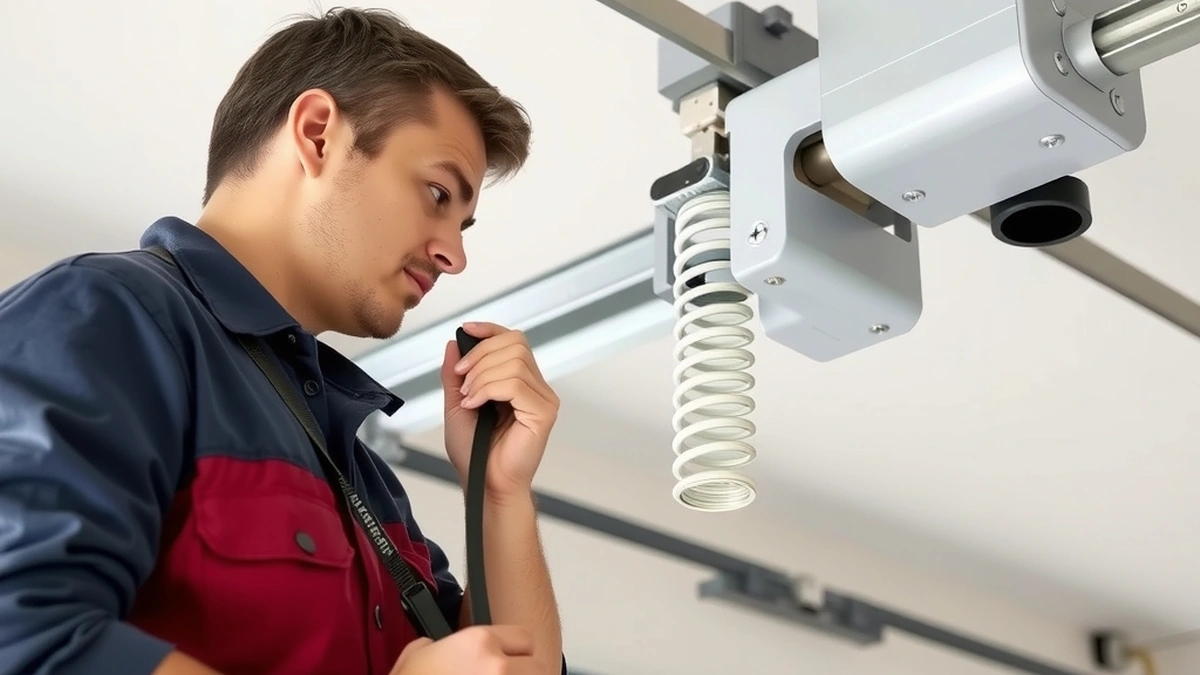
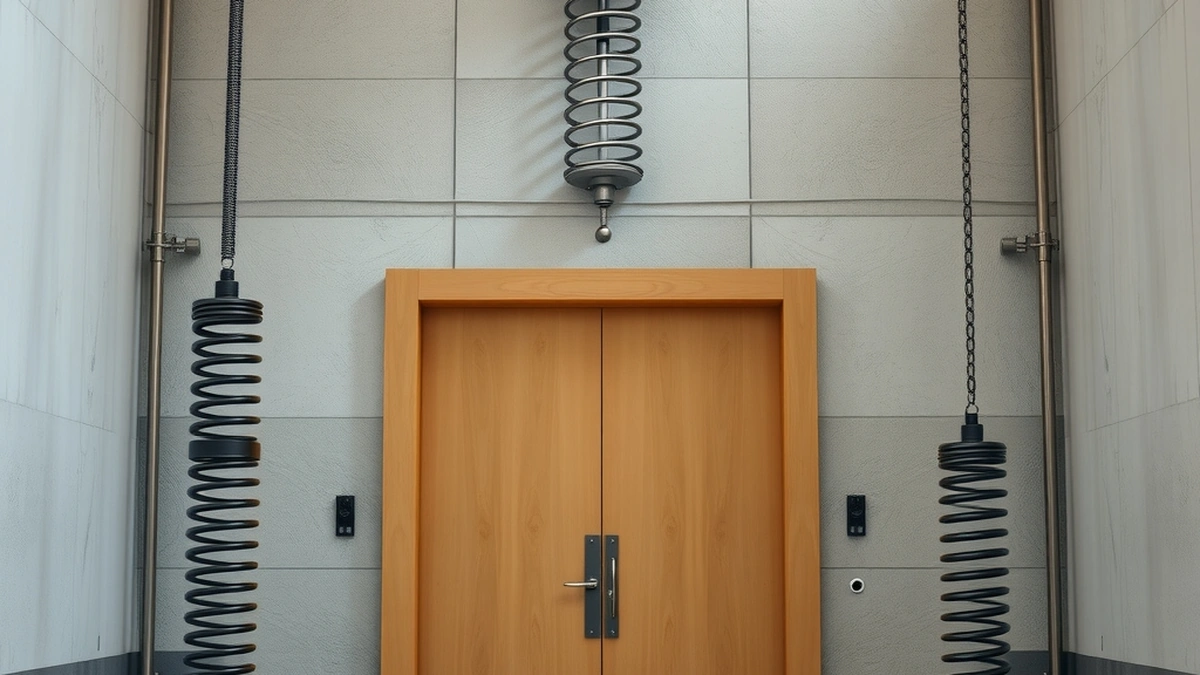
Torsion springs are horizontal above the door, on a shaft spanning the opening: one spring on a single-car door, two side by side on a wider one. They look like tight coils of oil-tempered wire, and the shaft carries a cable drum at each end.
Extension springs run along the sides, parallel to the horizontal tracks: one spring per side, a pulley, and a cable. A safety cable should run through the center of each spring; if one is missing, that is a defect worth correcting first.
How Each One Lifts the Door
The two mechanisms feel different and fail differently.
| Factor | Torsion spring | Extension spring |
|---|---|---|
| Location | Shaft above the door | Side tracks, one per side |
| Energy storage | Twisting | Stretching |
| Number on a door | One or two | Two, one per side |
| Installed replacement | $150–$400 | $100–$250 per pair |
| Typical cycle rating | 10,000 cycles | 10,000 cycles |
| Lift quality | Even across the door width | Can be uneven side to side |
| Failure behavior | Breaks on the shaft, contained | Can travel if no safety cable |
| Headroom needed | About 12 inches above the door | Clearance along the side tracks |
| Noise | Quieter | More creaking and stretching noise |
Torsion lift is even because both cables run off one shaft. Extension lift depends on two springs matched to each other; a mismatch shows as a door that hangs crooked or one side that lags.
What Each One Costs
Cost is the reason extension springs remain common on lighter doors.
Torsion replacement runs $150 to $400 installed, covering the spring, the labor to wind it safely, and basic hardware. A two-spring door roughly doubles the parts cost but usually takes one visit.
Extension spring replacement runs $100 to $250 per pair installed, with the springs themselves at $30 to $90 and labor at $70 to $160. That is $50 to $150 less per job than the torsion equivalent.
The gap narrows over time. Extension springs tend to wear faster on heavy or insulated doors, and a door with tired extension springs loads the rollers, hinges, and track harder. Cable repair, which is common after either type fails, runs $150 to $350. Add one cable repair to the extension column and the savings largely disappear.
Put it as a ten-year number. One torsion replacement at $150 to $400 is the whole cost. Two extension replacements at $100 to $250 each is $200 to $500, plus a higher chance of a $150 to $350 cable job in between.
Lifespan and Cycle Ratings
Both types are rated in cycles: one cycle is one open plus one close. Most standard residential springs, of either design, are rated around 10,000 cycles. At four cycles a day, that is roughly seven years. At two a day, closer to fourteen.
Two practical differences matter more than the headline rating. Extension springs on a heavy door are often pushed past their design load and lose tension as they age, so the door gets heavier before anything breaks. Torsion springs hold their balance until they fail, making failure sudden but performance predictable.
High-cycle springs are available for both at extra cost, worth specifying on a door that runs more than six cycles a day.
Which One Is Safer
Neither is safe to service yourself. Both store enough energy to break bones, and both require specific tools and technique to release safely. That said, the failure modes differ.
A torsion spring that breaks does so on its shaft, inside the coil, and the pieces stay on the shaft. It makes a loud bang and the door becomes very heavy, but nothing flies across the garage.
An extension spring that breaks can travel several feet. That is why safety cables are required to run through the center of every extension spring, and why a missing cable is an urgent defect. Even with cables, the failure is more violent than a torsion break.
For a door worth keeping, torsion is the safer design.
Which One Fits Your Door
Work through these in order before you ask for a quote.
- Look up. A shaft with coiled springs above the door means torsion. Springs along the side tracks mean extension.
- Measure the door width and height. Single doors under 9 feet wide are commonly extension; 16-foot double doors are usually torsion.
- Check the headroom above the door. Torsion needs roughly 12 inches; a low-headroom installation may be locked into extension or a low-clearance torsion setup.
- Note the door’s weight class. Insulated or carriage-style doors are heavy enough that torsion is the better match.
- Ask for the cycle rating in writing on any quote, along with whether the price covers one spring or both.
Do not convert a door from extension to torsion as a cost-saving measure. The conversion needs a shaft, drums, and new cable routing, and it usually costs more than replacing like for like.
For the price detail behind each column, see torsion spring cost and extension spring cost. For the failure symptoms that send most homeowners looking, see broken spring signs, and for the repair sequence, broken spring repair.
Bottom Line
Choose torsion if the door is wide, heavy, or insulated, if you want even lift and a contained failure, and if you can absorb $150 to $400 per replacement. Choose extension if the door is a light single-car door, the headroom is tight, and $100 to $250 per pair fits the budget — but insist on safety cables through both springs. Either way, the spring is the one part of the door that stays out of homeowner hands.
Frequently asked questions
What is the difference between a torsion and an extension spring?
A torsion spring mounts on a shaft above the door and stores energy by twisting. Extension springs mount along the horizontal side tracks and store energy by stretching.
Which is better, torsion or extension springs?
Torsion is generally better for heavy or wide doors. It lasts longer, lifts more evenly, and fails in a contained way. Extension springs are cheaper and common on lighter single-car doors.
Are torsion springs more expensive?
Yes, usually. Torsion replacement runs $150 to $400 installed against $100 to $250 for an extension pair, but torsion springs typically last longer and need fewer related repairs.
Which spring type is safer?
Torsion is safer in failure. A broken torsion spring stays on its shaft. A broken extension spring can travel, which is why safety cables through the spring are mandatory.
How long do garage door springs last?
Most standard residential springs are rated around 10,000 cycles, roughly 7 to 10 years at four open-close cycles a day. High-cycle springs are available at extra cost.
Can I convert from extension to torsion springs?
Yes, a technician can convert the door, but it requires a new shaft, drums, and cable routing. The cost usually exceeds a like-for-like replacement and only makes sense on a door worth keeping.
Sources
Some links are affiliate links.If you buy through them we may earn a commission at no extra cost to you. We do not accept payment for rankings. Read the full disclosure.