Noisy Door: What a Fix Costs
What a noisy garage door costs to quiet down, from a $15 lubrication job to a $400 spring replacement, with the parts and labor math for each tier.
Most noisy doors are quieted for $15 to $250: lubrication is $10 to $20, a roller set installed runs $125 to $250, and a torsion spring is $150 to $400. Only an opener or a damaged door pushes past $400.
- Lubrication only
- $10–$20
- Roller set installed
- $125–$250
- Torsion spring
- $150–$400
- Belt opener installed
- $300–$800
Some links on this page are affiliate links.If you buy through them we may earn a commission at no extra cost to you. We do not accept payment for rankings. Read the full disclosure.
A noisy garage door usually costs $15 to $250 to quiet down. The wide spread is not price gouging; it reflects what is making the noise. Dry metal needs $15 of lubricant, worn rollers need $125 to $250 installed, and a failing spring needs $150 to $400. Knowing which tier you are in before you call is the whole trick to keeping the bill small.
What the Price Actually Reflects
A noisy door repair is priced by the component that has to be corrected, not by the noise itself. That means the quote should name a part: a roller set, a hinge kit, a spring, a track section, or an opener drive. A quote that only says “adjust and lubricate” is a tune-up price, and it should be small.
Three numbers set every bill: parts cost, hourly labor, and the minimum service charge. In most US markets, door labor runs $75 to $150 per hour with a one-hour minimum, and many companies add a $49 to $89 service call fee on top.
The Three Price Tiers
Almost every noisy door falls into one of these bands.
Tier 1 — Lubrication and tightening: $10 to $20.
- Garage door lubricant: $10 to $15
- Rags and applicator: $3 to $5
- Labor: your own time
- Total: $10 to $20 in parts, $0 labor
Tier 2 — Rollers or hinges: $125 to $250 installed.
- Roller set, 12 rollers at $3 to $6 each: $36 to $72
- Labor, 1 to 1.5 hours at $75 to $150 per hour: $75 to $225
- Total: $125 to $250
Tier 3 — Springs, track, or opener: $150 to $800.
- Torsion spring replacement: $150 to $400
- Track realignment or replacement: $100 to $300
- Belt drive opener installed: $300 to $800
The jump between tier 1 and tier 3 is the reason diagnosis matters. Spending $250 on rollers when the grinding is coming from the opener gear fixes nothing, and spending $400 on a spring when the door only needed lubricant is worse than nothing.
Parts Versus Labor, Line by Line
| Work | Parts | Labor (1–2 hrs) | Installed estimate |
|---|---|---|---|
| Lubricate and tighten | $10–$20 | $0 DIY | $10–$20 |
| Full roller replacement | $30–$72 | $75–$225 | $125–$250 |
| Hinge replacement set | $30–$90 | $75–$150 | $105–$240 |
| Track realignment | $0–$40 | $75–$150 | $75–$190 |
| Torsion spring replacement | $75–$175 | $75–$225 | $150–$400 |
| Panel replacement | $200–$600 | included | $200–$600 |
| Belt opener installed | $150–$400 | $150–$400 | $300–$800 |
Treat the installed column as an estimate, not a quote. Regional labor rates, door height, and access all shift the number, and a two-car door with 12 rollers takes longer than a single door with 10.
When the Opener Is the Noise
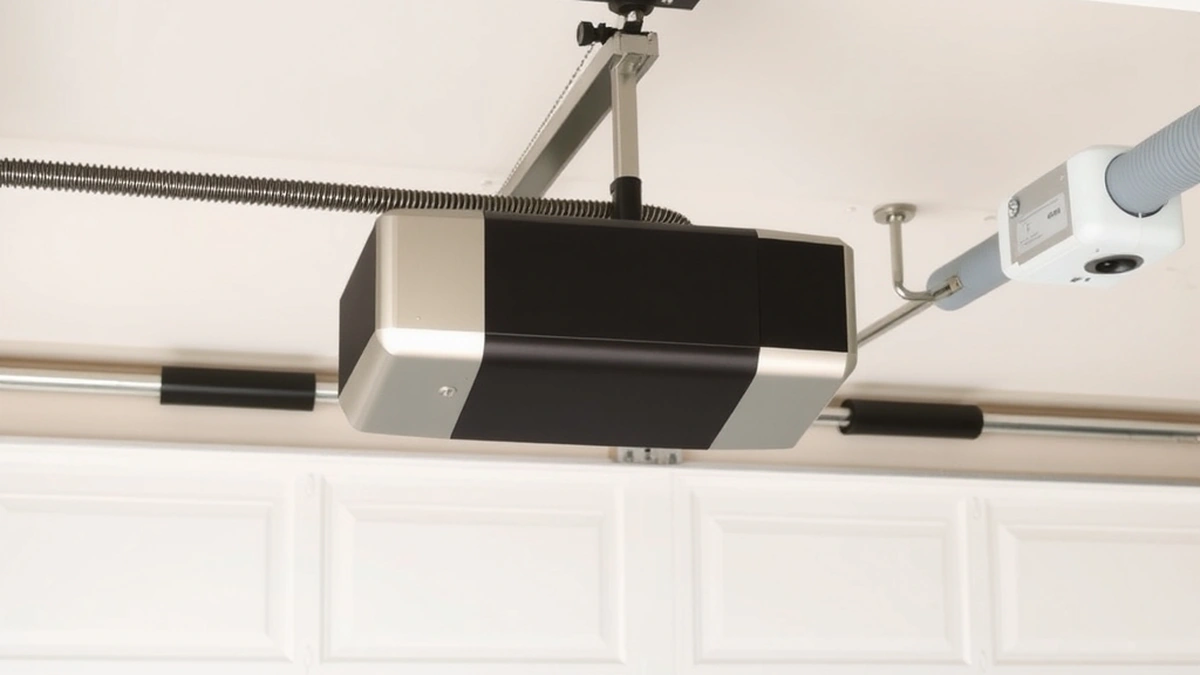
Chain drive openers are the loudest common type because the chain slaps the rail and the motor transmits vibration straight into the ceiling. Three fixes cost little: rubber isolators between the opener and its hangers, a check that the rail is not touching a joist, and correct chain tension. A loose chain slaps; an over-tight one whines.
If those do not help, the drive is the problem. A belt drive installed runs $300 to $800 and is the standard answer when the garage sits under a bedroom or a nursery. A screw drive is a middle option, quieter than chain and cheaper than belt.
Grinding from the opener head is different. That is usually a worn drive gear, and the repair typically runs $200 to $500. On a unit older than about 10 years, put that money toward replacement instead: $300 to $800 buys a new motor, new gear, new safety hardware, and a warranty.
When the Door Itself Is the Problem
Some noise is structural. A panel that has delaminated rattles against its own skin. A door that has been backed into binds in the track and scrapes. A door whose bottom section is rusted through transmits every roller bump into the frame.
Panel replacement runs $200 to $600 for a single section. That is worth doing when the rest of the door is sound and the panel is available in the same profile and color. A new door installed runs $800 to $4,000, which is the right call when two or more panels are damaged, the door is 25 years old, or repairs are approaching a third of replacement cost.
Put the comparison plainly: three $400 repairs over four years is $1,200, which is most of the way to a new door. One $250 repair on a 10-year-old door is not.
Emergency and After-Hours Pricing
Noise alone rarely justifies an emergency call. A door that is loud but functional can wait for a weekday appointment. An emergency call-out adds $250 to $500 on top of the repair, which turns a $150 tune-up into a $400 to $650 bill.
Two situations do justify it: a loud bang followed by a door that will not lift, and a door stuck open with the garage as the only secure entry. In the first case, stop using the door and call. In the second, price the emergency fee against the cost of leaving the house exposed overnight.
Getting a Quote That Holds
- Describe the sound, not the symptom: squeal, grind, rattle, scrape, or bang.
- Say when it happens: on opening, on closing, or throughout the travel.
- Ask what part the quote covers, and get the part named in writing.
- Ask whether the service call fee is separate from labor.
- Confirm whether the price includes disposal of old rollers or springs.
A technician who names the part over the phone is usually working from experience. One who quotes a flat “noise repair” fee without asking what the door sounds like is guessing.
For the repair sequence itself, see noisy door repair. For what different faults cost elsewhere on the door, see torsion spring cost and panel replacement cost. If the noise came on suddenly rather than gradually, read noisy door warning signs before running the door again.
Bottom Line
Budget $15 to $250 for a noisy door and you will cover most outcomes: lubricant at $10 to $20, rollers at $125 to $250, hinges and bolts inside a $75 to $150 tune-up. Springs at $150 to $400 and openers at $300 to $800 are the expensive tiers, and both are worth confirming before you commit. A door at $800 to $4,000 for replacement only makes sense when repairs start stacking up.
Frequently asked questions
How much does it cost to fix a noisy garage door?
Most fixes land between $15 and $250. Lubrication is $10 to $20 in parts, a roller set installed runs $125 to $250, and hinge or bolt work is usually folded into a tune-up.
Is a noisy garage door expensive to repair?
Usually not. Noise is one of the cheaper complaints because the cause is normally dry metal or a worn roller, both low-cost items. Springs and openers are the expensive outliers.
How much is a garage door tune-up?
Typically $75 to $150, and it usually includes lubrication, bolt tightening, balance check, and safety reverse adjustment. It is the most cost-effective way to stop noise.
Can I just lubricate the door myself?
Yes. A garage-door-specific lubricant costs $10 to $20 and handles most squealing. Do not lubricate the tracks, and do not touch springs or cables.
How much does it cost to replace garage door rollers?
Parts run $30 to $72 for a set of 10 to 12 rollers at $3 to $6 each. Professional installation brings the total to $125 to $250.
Is it cheaper to replace the door than keep repairing it?
Sometimes. A new door installed runs $800 to $4,000, so repairs make sense until they approach a third of that. A sagging, delaminating door with repeated track and panel problems is a replacement candidate.
Sources
Some links are affiliate links.If you buy through them we may earn a commission at no extra cost to you. We do not accept payment for rankings. Read the full disclosure.